Last updated November 18, 2026






Free written scope consultation - allowances, timeline, and change-order rules on paper before a single trade is scheduled
Kitchen Remodeling Troubleshooting: Common Problems and How to Fix Them
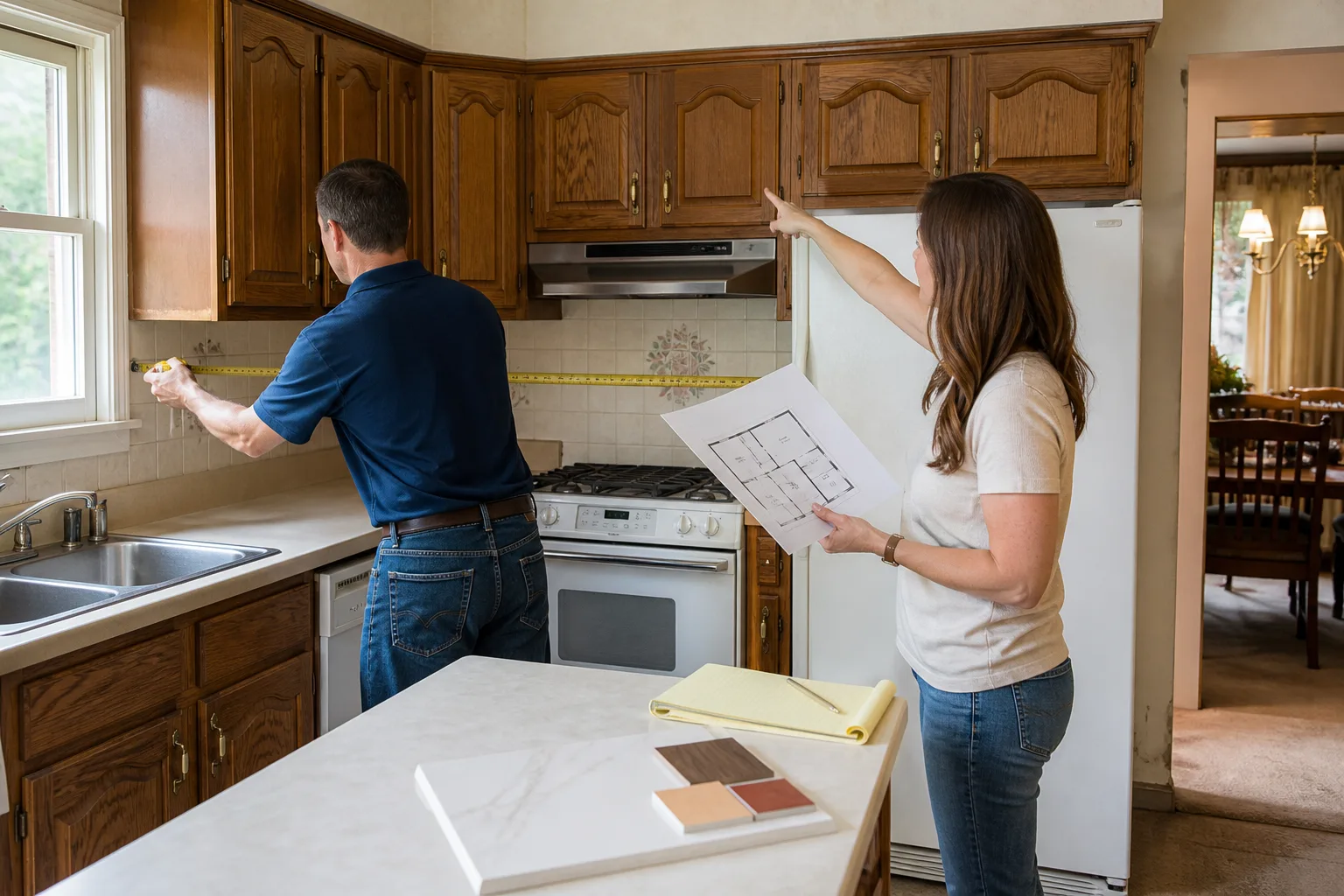
Cabinet doors that won’t stay closed six months after install usually aren’t a hinge problem. They’re a box-level issue caused by substrate movement that was there before the cabinets went up and got covered over. Replacing hinges is the fix that gets sold. Releveling and shimming the base is the fix that works. That pattern repeats across almost every post-remodel complaint we see in Kendall: the symptom shows up late, but the decision that caused it happened during construction. This guide works backward from what you’re seeing to what actually went wrong, and what a real fix requires.
Quick Answer
Most kitchen remodeling problems after move-in trace back to construction-phase decisions, not faulty materials. Grout cracks because the substrate flexed, cabinet doors drift because the base wasn’t level, and countertop gaps open because the cabinet run settled after template. The fix depends on whether the issue is cosmetic (a punchlist item) or structural (needs walls or cabinets opened), and a written workmanship guarantee should cover the structural ones for at least a full year.
Styles & brands we work with
- Kitchen remodeling
- Bathroom remodeling
- Home additions & ADU
- Roofing
- Windows & doors
- Driveway & pavers
- Fence
Table of Contents
- The Five Most Common Post-Install Complaints and Their Real Causes
- Cosmetic vs. Structural: How to Tell Before You Call Anyone Back
- What a 365-Day Workmanship Guarantee Should Actually Cover
- DIY-Safe Fixes vs. Fixes That Void Your Guarantee
- How to Document a Defect So It Can’t Be Dismissed
- Why Kendall Kitchens Fail Differently
- Building a Punchlist That Gets Fixed
- Common Mistakes to Avoid
The Five Most Common Post-Install Complaints and Their Real Causes
In our experience across Kendall kitchens, the same five complaints come up again and again. Each one has a symptom you notice and a cause you don’t see. Here’s the mapping.
- Grout cracking along the backsplash or floor tile. The cause is almost always movement in the substrate. Cement board (the moisture-resistant layer behind tile) that wasn’t screwed down tight enough, or a wood subfloor that flexes underfoot, lets the tile assembly shift a few thousandths of an inch. Grout is rigid, so it cracks. Regrouting without fixing the substrate buys you six months.
- Cabinet doors that drift, rub, or won’t latch. This is the one from the opening. When cabinet boxes are set on an unlevel floor or against a wall that’s out of plumb, the frames twist. Hinges get blamed, but a twisted box will pull any hinge out of alignment eventually. The fix is releveling and shimming the base, which means pulling the cabinets.
- Gaps between the countertop and the wall or between seams. Countertops are templated to the cabinets as they sit on template day. If the cabinet run settles afterward, the counter doesn’t follow. A gap at the wall is a caulk-and-seal job. A gap at a seam is a fabricator issue and shouldn’t happen with proper seaming.
- Exhaust fan that’s louder than the showroom model. The fan itself is rarely the problem. Undersized ducting, too many elbows in the run, or a duct that terminates too close to the roof deck all choke airflow and amplify noise. The fix is in the duct path, up in the ceiling or roof, not at the fan.
- Outlets in the wrong place or too few of them. This is a planning miss, not a defect. It surfaces when you plug in the coffee maker and realize the only open receptacle is behind the fridge. Relocating outlets is a real electrical job, and in Kendall it triggers inspection.
If you’re early enough in the process to avoid these, the planning conversation matters more than the product selection. Our Kitchen Remodeling in Kendall page walks through what gets decided before demo day.
Cosmetic vs. Structural: How to Tell Before You Call Anyone Back
Before you pick up the phone, figure out which category your problem falls into. It changes who should fix it, how long it takes, and whether you should be worried.
- Cosmetic (punchlist): Paint touch-ups, caulk lines that have shrunk, a door that needs adjusting at the hinge plate, a drawer glide that’s loose, grout that’s discolored but not cracked through. These are handyman-level and any competent contractor handles them on a return visit.
- Structural: Cracks that run through the tile itself, not just the grout. Cabinet frames that are visibly out of square against a level. Gaps that are widening month over month. Water staining at a seam or under a sink. These require opening something up, and they should be covered by your workmanship guarantee.
Here’s the test we give homeowners: put a level on the countertop and a straightedge against the cabinet face. If the bubble is off or you can see daylight under the straightedge, it’s structural. Second test: mark the edges of a crack or gap with a pencil and a date, then check it in two weeks. If it’s moved, it’s structural and getting worse. If it hasn’t, it’s cosmetic and stable.
One more category worth knowing: owner-caused damage. A cabinet door that got slammed hard enough to crack the frame, or a countertop chipped by a dropped pan, isn’t a workmanship issue and no guarantee covers it. Being honest with yourself about which bucket you’re in saves everyone a difficult conversation.
What a 365-Day Workmanship Guarantee Should Actually Cover
A workmanship guarantee is only as good as its language. We’ve seen plenty of contracts that promise “satisfaction” and then list six exclusions that swallow the promise. Here’s what the coverage should look like, issue by issue.
- Grout cracking: Covered if the crack is through the grout line and not caused by a structural crack in the slab or subfloor underneath. The guarantee should commit to addressing the substrate if that’s the cause, not just regrouting.
- Cabinet misalignment: Covered for the full period if the cause is installation. Releveling and re-shimming should be on the contractor, including pulling and resetting the cabinets.
- Countertop gaps at the wall: Covered as a return visit. Gaps at a seam are a fabricator warranty issue and should be handled through the contractor who sourced the top.
- Exhaust fan noise: Covered if the noise is caused by ducting the contractor installed. Not covered if the fan itself failed, which is a manufacturer warranty.
- Outlet placement: Not typically covered once the job is signed off and inspected, because it’s a design decision made with the homeowner. This is why the layout conversation matters so much up front.
The language that lets contractors wiggle out is usually “normal settling,” “seasonal movement,” or “owner-caused.” A guarantee worth the paper should define those terms narrowly or exclude them entirely. The 365-Day Done Right Promise we operate under is written to cover workmanship failures for a full year, with a free return visit if a repair fails and no service-call or re-inspection fee. That’s the bar to hold any contractor to.
Material warranties stack on top of workmanship. A Cambria quartz top carries its own lifetime warranty alongside the installation guarantee, and Kohler and Moen fixtures carry their own coverage. Ask which layer covers which failure before you sign.
DIY-Safe Fixes vs. Fixes That Void Your Guarantee
Some problems you can handle yourself in ten minutes. Others will cost you your guarantee the moment you touch them. The line is usually about whether your repair hides the symptom or fixes the cause.
Safe to do yourself:
- Re-caulk a shrinking caulk line at the backsplash or sink. Use a silicone caulk rated for kitchen use, and remove the old bead completely first.
- Adjust a cabinet door at the hinge plate. Most European hinges have two or three adjustment screws for height, depth, and side-to-side.
- Tighten a loose drawer glide with the screws already in the box.
- Touch up paint on a scuffed cabinet face or trim.
Do not touch, or you void the guarantee:
- Regrouting tile. If you regrout over a substrate problem, the contractor can reasonably say you altered the assembly and the cause is unclear.
- Re-shimming or releveling cabinets. Same logic, plus you can crack a countertop doing it.
- Anything electrical, including moving or adding an outlet.
- Cutting into drywall or cabinet panels to investigate a gap. This is exactly what the return visit is for.
If you’re not sure which side of the line you’re on, call first and ask. A legitimate contractor will tell you whether to touch it. Our team fields that call at any hour, which is worth knowing before you start prying at a cabinet panel on a Sunday. If your kitchen is part of a larger project, the General Contractor in Kendall page covers how workmanship coverage applies across trades.
How to Document a Defect So It Can’t Be Dismissed
Contractors dismiss claims they can’t verify. Your job is to make the defect impossible to wave off. Here’s the process that works.
- Photograph it with a reference object. A coin or a tape measure laid next to the gap gives scale. A photo of a crack with nothing in frame proves nothing.
- Mark and date. Pencil a small line at the edge of the crack or gap, write the date next to it, and photograph the mark. Check again in two weeks and photograph the same spot. If the mark has separated, you’ve documented movement.
- Write a one-paragraph description. What it is, where it is, when you first noticed it, and what changed since. Keep it factual. “The gap between the countertop and the backsplash on the sink wall widened from about 1/16 inch to 1/8 inch between March 3 and March 17” beats “the counter is falling apart.”
- Send it in writing. Email, with the photos attached, to the same address you received the written price from. A phone call is a conversation; an email is a record.
- Ask for a written response. What they’ll do, when, and who’s coming. The Kingswell Way standard we operate under requires a defined arrival window on every visit, so the response should include one.
Keep everything in one folder. If the problem needs a second visit, you’ll want the original photos and dates in hand. It’s also the difference between a claim that gets resolved in one visit and one that drags on for months.
Why Kendall Kitchens Fail Differently
Kendall has a specific set of conditions that shape which problems show up and when. If you live here, you should know them.
Humidity is the constant. South Florida’s year-round humidity swings wood cabinet boxes more than they’d move in a drier climate. That’s why cabinet doors here drift more in the first year than they would elsewhere, and why the shim and level work has to be done right the first time. A box that’s out of level will pull worse here than it would up north. In a Kendall kitchen, we regularly see cabinet doors out of alignment by month four, not month twelve.
Slab-on-grade construction. Most Kendall homes sit on concrete slabs, which don’t flex like a wood subfloor but do transmit moisture. Tile set directly over a slab that hasn’t cured or been properly prepped will crack grout lines in a predictable pattern. The fix is a proper crack-isolation membrane (a thin sheet that decouples the tile from the slab), and it’s cheaper to install during the remodel than to retrofit.
Building code. Miami-Dade and unincorporated Miami-Dade County, which covers much of Kendall, require permits for electrical, plumbing, and structural work in a kitchen. Outlet relocation, new circuits, and any layout change that moves a wall all trigger inspection. That’s a good thing, but it means DIY electrical work isn’t just a guarantee problem, it’s a code problem. The county inspects the work, and unpermitted work can complicate a future sale.
Impact-rated windows and doors. If your kitchen remodel includes a window or door change, the opening has to meet impact rating requirements. That affects trim, framing, and sometimes the countertop run against the wall. Worth planning for.
Older housing stock in neighborhoods like West Kendall and Kendall Drive corridors. Homes built in the 1970s and 1980s often have plumbing and electrical that looks fine on the surface but doesn’t meet current code once you open a wall. Budget for surprises, or have the contractor scope it before the written price goes out.
If you’re in the middle of a larger renovation that spans more than one room, the Bathroom Remodeling in Kendall page covers how the same conditions affect bathrooms, and the Penhallow Remodeling Kendall home page has the full scope of what we handle.
Building a Punchlist That Gets Fixed
A punchlist is the written list of remaining issues at the end of a project. Done right, it’s the last thing standing between you and a clean handoff. Done wrong, it’s a list of things nobody ever comes back for.
- Walk the kitchen room by room, in order. Start at one corner and work clockwise. Don’t jump around. You’ll miss things.
- Test everything you can. Open every cabinet and drawer. Run every appliance. Turn on every light and outlet. Run the exhaust fan and listen. Run the water and check under the sink for drips.
- Photograph each item. Same rules as before: reference object, mark, date.
- Write it up as a numbered list with a location and a description for each item. “Item 4: Cabinet door above the microwave, upper left, rubs against the frame at top corner when closed. Photo attached.”
- Get a signed and dated copy with a written date for each item’s resolution. Not “we’ll get to it,” not “soon.” A date. The Kingswell Way standard we work to requires the job site to be left cleaner than we found it, and a punchlist that gets fixed is part of that same commitment.
If the contractor won’t commit to fixed dates, that’s a signal. Call us at (844) 560-5417 and we’ll talk through what a realistic punchlist looks like, even if we’re not the ones who did the work.
Common Mistakes to Avoid
- Skipping the substrate conversation. Ask what’s going under the tile before the tile goes down. If the answer is “the old floor,” ask why. In Kendall’s slab construction, this is the single biggest cause of grout failures down the road.
- Letting the contractor talk you into a verbal price. A verbal estimate isn’t a commitment. Get the number in writing before any cabinet is pulled, and make sure the invoice language matches.
- Not asking about the exhaust duct path. Fan noise is a duct problem, not a fan problem. Ask where the duct terminates and how many elbows are in the run before the drywall closes it up.
- Plugging in an outlet layout without planning. Walk the counter with your actual appliances before the electrician roughs in. In Kendall, every outlet move after inspection is a permit-pull and a wait.
- Doing DIY work that touches a guaranteed assembly. Regrouting or re-shimming over a known problem voids the workmanship coverage. The value of the 365-Day Done Right Promise disappears the moment you touch the thing it protects.
- Reporting a defect by phone only. A call logs a conversation, not a defect. Email with photos and dates, every time. It’s how you keep a contractor from dismissing a real problem as “normal settling” a year later.
- Assuming code inspections are a formality. Miami-Dade inspections catch real problems, and they catch unpermitted work at sale. Have the contractor pull permits and show you the inspection pass.
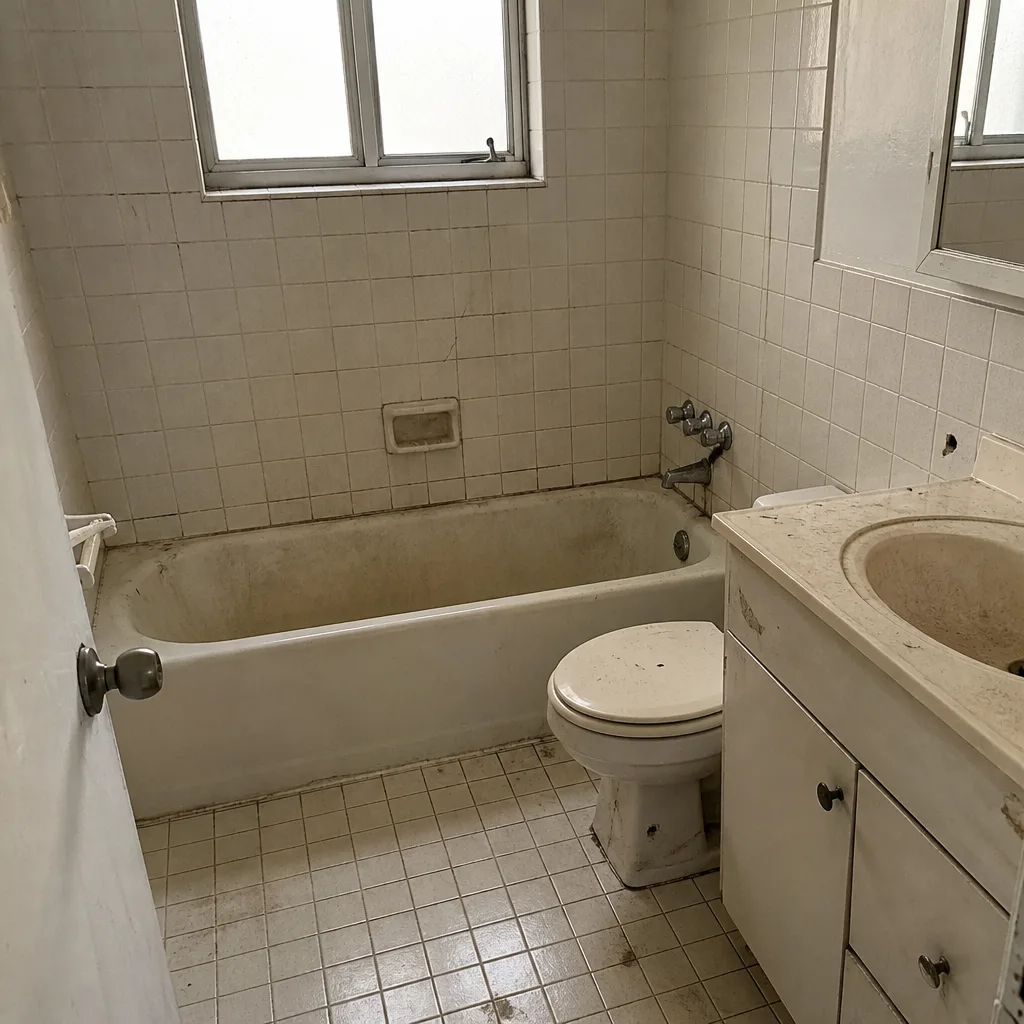
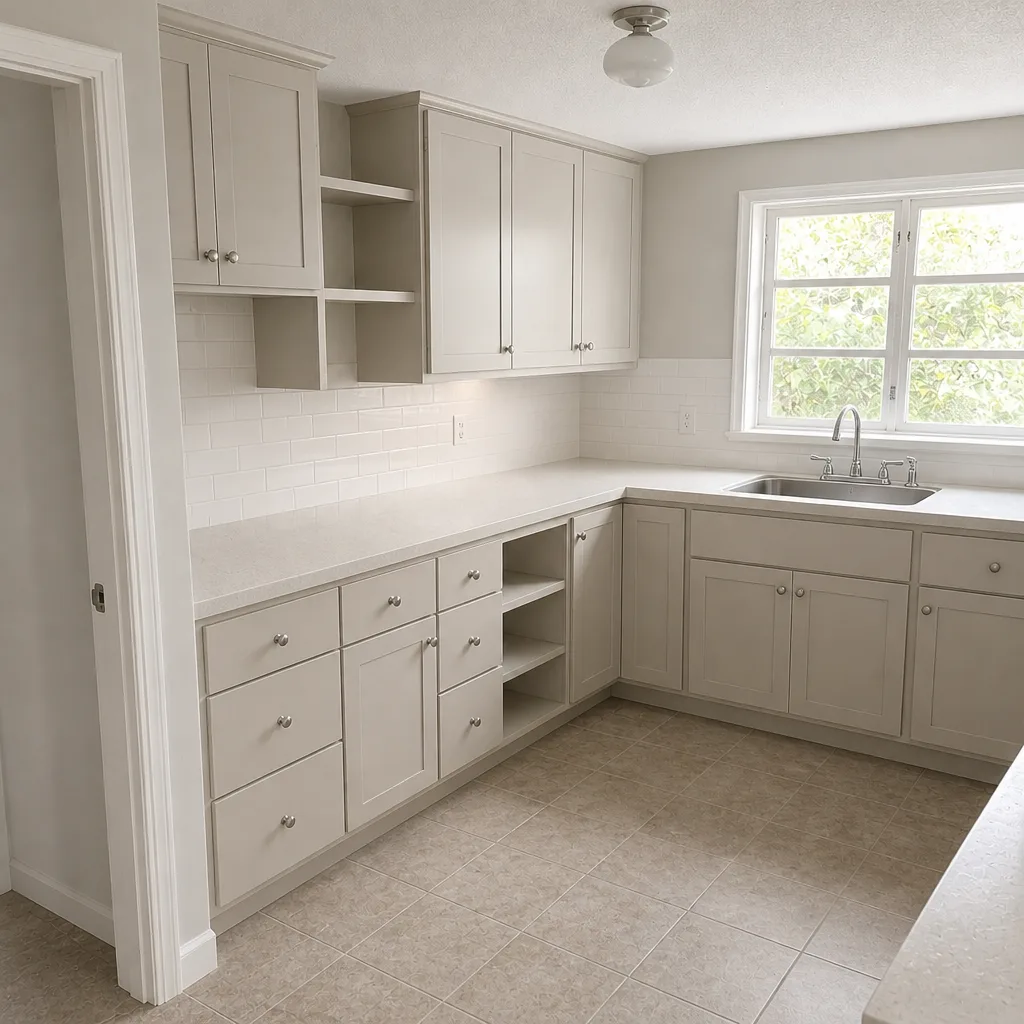
See the difference
 Before
 After
 Before
 After
 Before
 After
When to Call a Professional
Call a professional when the problem crosses the line from cosmetic to structural, when it involves anything electrical, plumbing, or gas, or when you’re not sure which side of the line you’re on. A widening gap, a crack that runs through the tile, water staining under a sink, a fan that’s getting louder, or a cabinet frame you can see is out of square all warrant a return visit. Don’t try to diagnose those yourself; a good contractor would rather look at it before you start prying at panels. The same goes for anything on a newly installed assembly still inside its workmanship window: use the guarantee, don’t void it. Penhallow Remodeling Kendall offers free estimates in Kendall, and a live person answers the phone around the clock. Call (844) 560-5417 to schedule yours.
Frequently Asked Questions

Cosmetic punchlist fixes typically run $150 – $400 for a return visit, and structural fixes like releveling cabinets or redoing tile over a failed substrate run $800 – $3,500 depending on scope. If the problem is inside your workmanship guarantee, it should cost you nothing. Call (844) 560-5417 for an exact quote; estimates are free.
Cracked grout is a real problem if the crack runs through the grout line and keeps widening, because it usually means the substrate is moving underneath. Hairline cracks that appear once in the first month and stop are common and can be cosmetic. Mark it, date it, and check it again in two weeks. If it’s moved, call (844) 560-5417 and we’ll look at it.
You can safely adjust a cabinet door at the hinge screws or tighten a loose drawer glide without voiding anything. What voids a workmanship guarantee is re-shimming, releveling, or opening a cabinet box to chase a misalignment, because it alters the assembly the guarantee covers. If the doors are drifting, call first.
A year is the reasonable minimum for workmanship, which is why the 365-Day Done Right Promise covers a full twelve months on every project. Material warranties stack on top, often for much longer. Ask any contractor exactly what’s covered, what’s excluded, and how a claim gets filed before you sign.
Fan noise is almost always a duct problem: an undersized duct, too many elbows, or a run that terminates too close to the roof deck. The fan itself is rarely the cause. Fixing it means getting into the ceiling or roof to correct the duct path, which is a return-visit job. Call (844) 560-5417 to have it evaluated.
Yes. Moving or adding a kitchen outlet in unincorporated Miami-Dade County requires a permit and an inspection, and unpermitted electrical work can complicate a future sale. Have the contractor pull the permit and show you the inspection pass. Call (844) 560-5417 to talk through the permit scope on your specific job.
The Bottom Line
Most post-remodel kitchen problems come from construction-phase decisions you didn’t see, not from bad materials. Grout cracks because the substrate flexed, cabinets drift because the base wasn’t level, and fan noise lives in the duct. The fix is to trace the symptom to the cause, decide whether it’s cosmetic or structural, and hold the workmanship guarantee to its language. Document everything with photos, marks, and dates, don’t DIY anything that touches a guaranteed assembly, and keep the contractor’s written commitments in one folder. In Kendall, humidity and slab construction make these problems show up faster and worse, so plan for them up front.
Get a Written Price Before Work Starts

If you’re pricing a kitchen in Kendall and you want a written number in hand before anyone picks up a tool, call Penhallow Remodeling Kendall at (844) 560-5417 for a free estimate. A real person answers around the clock. Every project gets a written price before work starts, a defined arrival window, background-checked and uniformed technicians, and the 365-Day Done Right Promise in writing. If something fails inside the year, we come back and make it right, at no charge, with no service-call fee.
We install recognized trade brands like KraftMaid and Wellborn cabinetry, Cambria and Silestone countertops, and Kohler and Moen fixtures, so the products behind the guarantee are as solid as the promise. Each Penhallow location operates independently as part of the Kingswell family of companies, under the Kingswell standard: say the price before the work, show up in the window we gave, leave the place cleaner than we found it. Call (844) 560-5417 to schedule your free estimate.
Written by the team at Penhallow Remodeling Kendall.