
Last updated November 18, 2026








Free written scope consultation - allowances, timeline, and change-order rules on paper before a single trade is scheduled
General Contractor Maintenance Schedule: What to Do and When
The grout that cracks at six months, the door that swells in August, the caulk line that separates before the first rainy season – none of these are bad luck. They’re predictable, and they have a schedule. A finished remodel goes through a break-in period, usually the first 12 months, when new materials settle, expand, contract, and settle again. Most homeowners miss it entirely because no one told them what to watch for after move-in. This guide lays out exactly what to check, when to check it, and how to tell the difference between a maintenance item and a workmanship problem worth a phone call. We’re writing it from Kendall, where the humidity rewrites the standard national timeline.
Quick Answer
After a remodel, plan on three checkpoints in your first 90 days (30, 60, and 90 days) to catch settling, paint adhesion, and caulk separation before they let water in. Then move to a seasonal rhythm built for South Florida – pre-rainy-season in May, post-rainy-season in November – and one annual review of your permit record and guarantee paperwork. Anything tied to how the work was installed falls under your contractor’s workmanship guarantee; wear, cleaning, and filter changes fall to you.
Styles & brands we work with
- Kitchen remodeling
- Bathroom remodeling
- Home additions & ADU
- Roofing
- Windows & doors
- Driveway & pavers
- Fence
Table of Contents
- Why a Finished Remodel Has a Break-In Period
- The 30-60-90 Day Post-Completion Checklist
- South Florida Maintenance Triggers: Humidity, Rainy Season, and Salt Air
- Guarantee vs. Maintenance: Where the Line Falls
- How to Log Maintenance Actions That Protect a Guarantee Claim
- Your Permit Record: The Annual Task Most Homeowners Skip
- The Full Seasonal Calendar for Kendall Homes
- Common Mistakes to Avoid
Why a Finished Remodel Has a Break-In Period
New construction and new finishes move. Wood framing takes on and releases moisture. Drywall compound cures and shrinks slightly. Grout hardens and pulls a hair away from tile edges. Caulk skins over on the outside and stays soft underneath for weeks. Cabinets settle onto their shims under the weight of dishes. None of this means the work was bad – it means the materials are doing what materials do in a house that’s now lived in instead of sealed off and climate-controlled.
In our experience across Kendall remodels, the first 90 days produce the most small movement, and the first full rainy season produces the rest. That’s why we hand every homeowner a walkthrough at completion and a written guarantee, then tell them the honest thing: check the small stuff early. A hairline in the caulk around a tub surround is a five-minute fix at month two and a water intrusion problem at month ten.
This is the part most contractors leave out. The Penhallow Remodeling Kendall home page spells out the standard we hold to – a written price before work starts, a real arrival window, and the 365-Day Done Right Promise – but a guarantee only helps if the homeowner knows what to look at and when. That’s what the rest of this guide is for.
What “break-in” actually covers
- Settling: cabinets, doors, and trim shifting a few millimeters as weight and humidity change.
- Paint adhesion: primer and topcoat bonding fully over the first 30 to 60 days, especially over patched drywall.
- Caulk and sealant: shrinking slightly as solvents evaporate, which is why a fresh bead sometimes opens a gap.
- Grout: curing and micro-cracking at high-traffic seams long before anything is actually wrong.
The 30-60-90 Day Post-Completion Checklist
This is the schedule that prevents the expensive stuff. Three visits to the same five spots, five minutes each. Do it with a phone camera so you have dated photos to compare against later.
Day 30: Paint, caulk, and door swing
- Walk every painted wall at an angle in daylight and look for bubbling, peeling, or a chalky haze on trim – all signs of adhesion trouble while it’s still a repaint, not a repair.
- Press a dry fingertip along every caulk line in the kitchen and baths. Any gap or lift gets noted with a photo and the date.
- Open and close every interior door and drawer. Note any that rub, stick, or won’t latch. In Kendall humidity, this shows up fast.
- Check that all cabinet doors and drawers are aligned and that hinges are snug.
Day 60: Tile, grout, and water lines
- Look at the grout at floor-to-wall seams (the “change of plane”) in showers. That seam is supposed to be sealed with flexible caulk, not rigid grout, and it’s the first thing to fail.
- Check under every sink for moisture at the supply lines and P-trap. A dry paper towel wiped along the joints tells you plenty.
- Press on any newly tiled floor to feel for hollow-sounding spots near the edges.
- Run every fixture – Kohler and Moen faucets, shower valves – and watch for drips at the base.
Day 90: Sealants, exterior, and the punch list close-out
- Re-check every caulk line from day 30 and note what changed. This comparison is your best record if you file a claim later.
- Walk the exterior of any addition or window project for sealant gaps, especially on south- and west-facing walls that take the most afternoon sun and rain.
- Confirm the punch list from your final walkthrough is fully closed out and that you have it in writing.
- Note anything still moving and call it in before the 365-day promise window gets far behind you.
South Florida Maintenance Triggers: Humidity, Rainy Season, and Salt Air
National maintenance guides are written for a climate that isn’t ours. The generic “check your caulk once a year” advice assumes four gentle seasons. Kendall runs on a different clock: a wet season from roughly May through October, year-round humidity that hovers high enough to keep wood and drywall never fully dry, and salt air that reaches inland homes on the prevailing breeze and attacks metal fasteners, hinges, and exterior hardware.
What that means in practice:
- Caulk and sealant fail faster here. Where a national guide says inspect annually, we tell Kendall homeowners to inspect before and after the rainy season – twice a year, every year.
- Doors and cabinet fronts swell in late summer. Wood and MDF absorb humidity and expand. A drawer that slid in February can drag by August. Usually it needs a small adjustment, not replacement.
- Salt air corrodes exterior hardware. Hinges, gate latches, hose bibs, and the fasteners on James Hardie siding and trim benefit from an annual rinse and a look for rust bloom.
- Mold pressure is real. Bathrooms and any room with reduced airflow need their exhaust fans verified working and their caulk kept sealed – a bead that opens is an invitation.
Pavers and hardscape take a beating too. If your remodel included a patio, the polymeric sand between pavers from a Techo-Bloc or Cambridge Pavers install needs topping off after heavy rain seasons, and the joints should never be left open going into the wet months. A quick look each May catches it.
Guarantee vs. Maintenance: Where the Line Falls
This is the distinction that protects both you and the contractor, and it’s the one homeowners most often get wrong. The line is simple once you say it plainly: workmanship failures are ours; wear and upkeep are yours.
A workmanship failure is something tied to how the work was installed – a shower pan that leaks, a caulk line that separates at a change of plane because it was grouted instead of sealed, a cabinet that pulls loose from its anchors, a fixture that drips at the connection. That’s what the 365-Day Done Right Promise is for: if it’s not done right within that window, we come back and make it right at no charge, and a repair that fails gets a free return visit with no re-inspection fee. It’s written on every project.
Normal maintenance is the stuff no guarantee covers, because it isn’t a defect: clogged shower drains, worn weatherstripping, a filter you didn’t change, grout that’s discolored from cleaning products, or a hinge that loosened because a door was slammed for a year. Keeping the two straight matters because a homeowner who treats a maintenance item as a defect wastes a service call, and a homeowner who treats a defect as maintenance can let water run for months.
Quick test
- Did it fail where two materials meet, at a connection, or shortly after install? Likely workmanship.
- Is it worn, dirty, clogged, or the result of daily use over time? Likely maintenance.
- Not sure? Call and describe it. That’s what the 24/7 live phone line is for – a real person, not a voicemail maze.
How to Log Maintenance Actions That Protect a Guarantee Claim
If something goes wrong in month ten, the difference between a smooth claim and a hard conversation is usually documentation. You don’t need a spreadsheet app; a notebook in the kitchen drawer does the job.
- Date every entry. “May 14 – checked caulk in hall bath, small gap at tub, photographed.” That’s enough.
- Photograph defects the day you spot them. A dated phone photo of a separating bead before it spreads is worth more than a description after.
- Note what you did about it. If you re-caulked a cosmetic seam yourself, say so. If you left it for the contractor, note when you called.
- Log your own maintenance too. Changing an HVAC filter or cleaning a shower drain isn’t a guarantee issue, but showing you did routine upkeep removes any argument that neglect caused a failure.
- Keep the paperwork together. Your written price, the guarantee document, the final walkthrough punch list, and this log – one folder, physical or digital.
When you call, you can point to the date and the photo. That’s how a guarantee claim stays simple.
Your Permit Record: The Annual Task Most Homeowners Skip
When permitted work is done, the permit isn’t finished when the crew drives away – it’s finished when the final inspection is signed off and recorded. Most homeowners never verify that, and it can sit on your property record as an open permit for years. That matters when you sell, refinance, or file an insurance claim.
Once a year, pull your permit record through Miami-Dade County’s online system and confirm the final sign-off is on file for every project that required one. If you see an open permit, call the office that issued it and ask what’s needed to close it. It’s a fifteen-minute task that saves a headache at closing. Our General Contractor in Kendall page explains how permitting works for remodels here, and any reputable company pulls the permits and stands behind the inspections – it’s part of doing the job properly, not a favor.
The Full Seasonal Calendar for Kendall Homes
Here’s the rhythm we recommend to every homeowner after a kitchen or bath remodel in Kendall. Two checkpoints a year, aligned to our wet and dry seasons, plus the annual paperwork review.
- Early May (before the wet season): Inspect all caulk lines and re-seal any that are opening. Clear patio drains and re-sand paver joints if needed. Verify bath exhaust fans run. Check exterior sealant around windows and doors.
- Mid-season (July-August): Expect humidity-driven swelling – check door and cabinet function and adjust hinges or drawer guides. Watch for moisture under sinks.
- Early November (after the wet season): Recheck every caulk line and sealant. Look for rust bloom on exterior hardware from salt air. Inspect grout at change-of-plane seams. Log everything.
- Annually: Verify your permit record shows final sign-off. Check your guarantee documents are still on file. Review your maintenance log against this schedule.
For rooms that get the most moisture, the standard is a little tighter. In Bathroom Remodeling in Kendall, we tell homeowners to check shower seams monthly and keep the fan running for twenty minutes after every shower. Kitchens get their own annual look at the sink seal and any countertop seams – the Kitchen Remodeling in Kendall guide covers what to watch around cabinets and stone countertops like Cambria, Silestone, and Caesarstone, all of which carry their own manufacturer warranties alongside our workmanship promise.
Common Mistakes to Avoid
- Skipping the 60- and 90-day checks. The whole point of the schedule is catching movement while it’s still a five-minute fix. Miss it and a small gap becomes a repair.
- Using rigid grout where flexible caulk belongs. At floor-to-wall seams and corners, grout cracks as the house moves. That seam should be sealed with flexible caulk so it can flex without opening a water path.
- Treating a workmanship issue as maintenance. If a fixture drips at its connection or a cabinet pulls loose within the first year, call it in before you spend your own money on it.
- Ignoring Miami-Dade permit records. An open permit you never verified can stall a sale years later. Check the final sign-off annually.
- Skipping the pre-wet-season caulk check. In Kendall, the seam that’s open in May becomes a leak by August. Seal it in the dry weeks, not after the first storm.
- Not keeping a dated log. Without dates and photos, a guarantee claim in month ten turns into “he said, she said” – even when you’re right.
- Letting bath fans die quietly. A weak exhaust fan in a South Florida bathroom is one of the fastest routes to a moisture problem behind the walls. Test it yearly.
See the difference
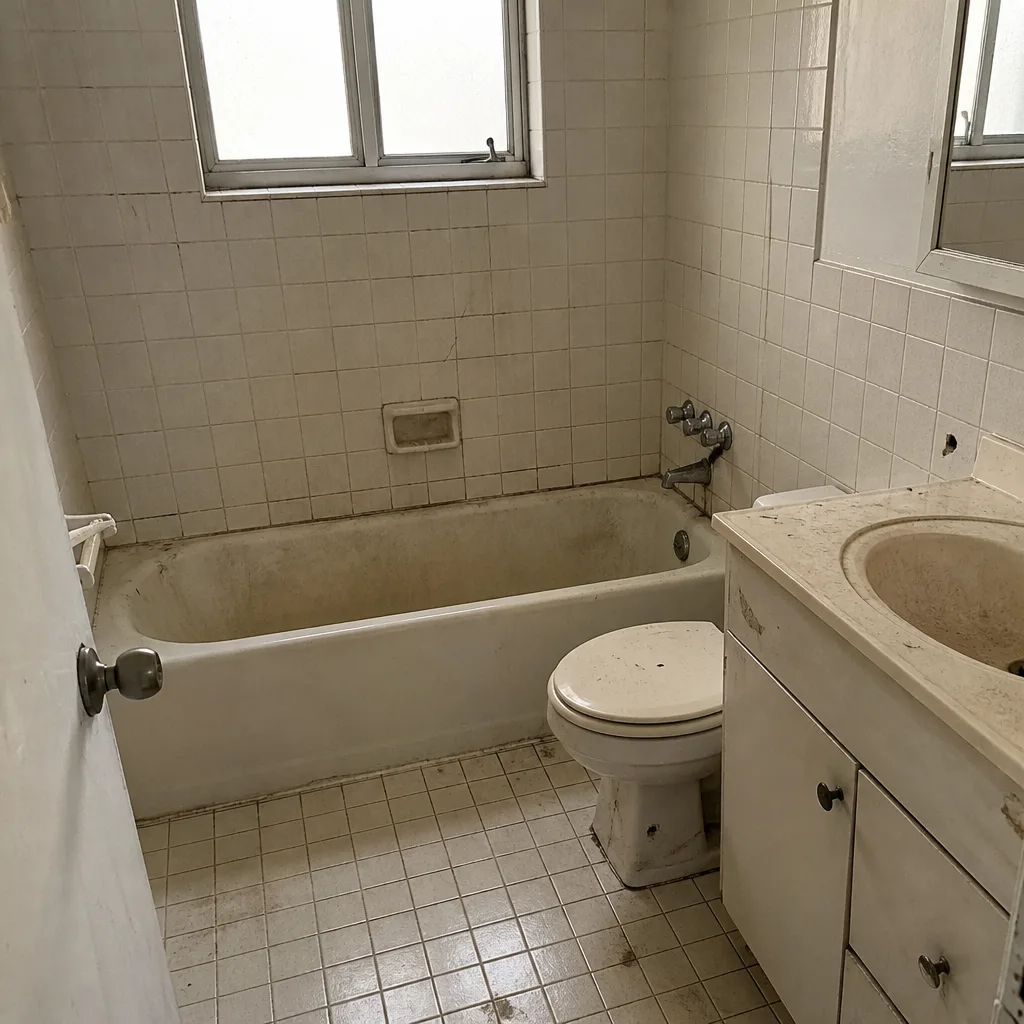 Before
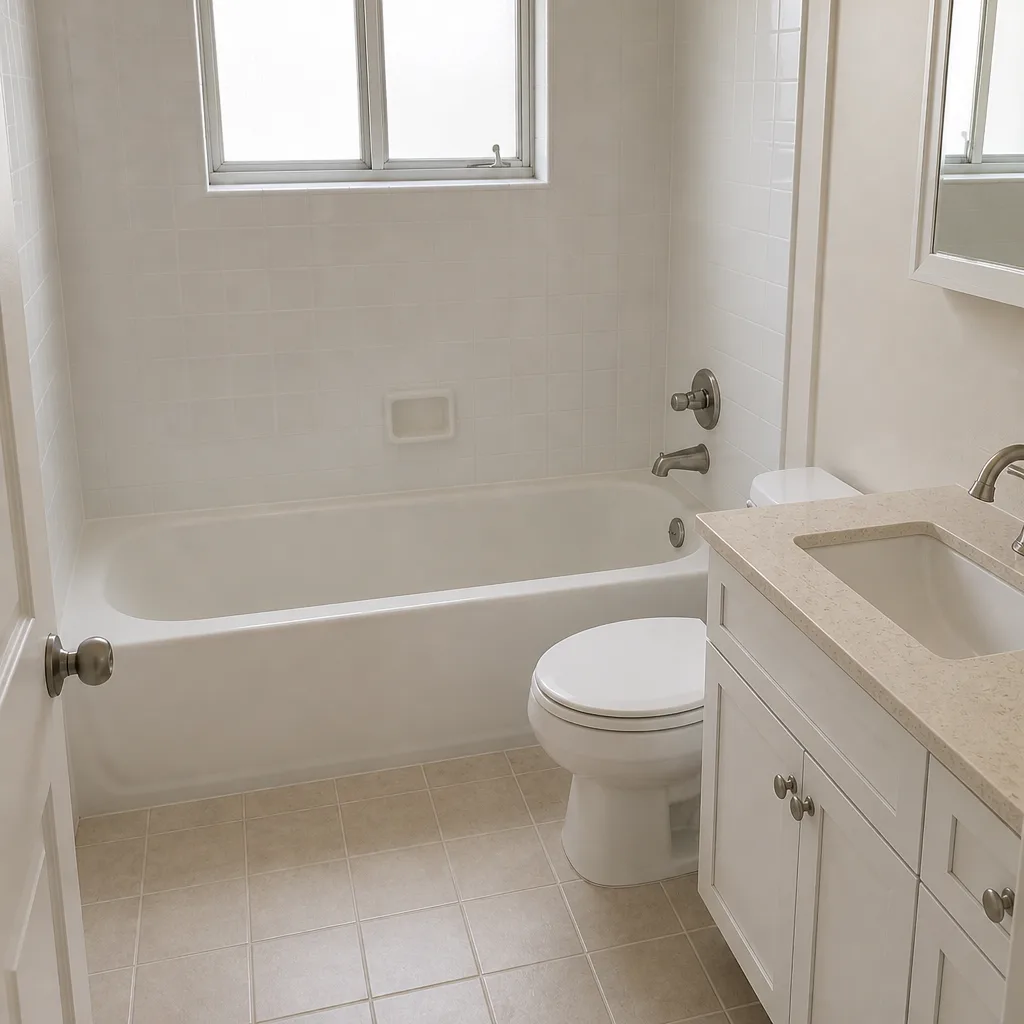 After
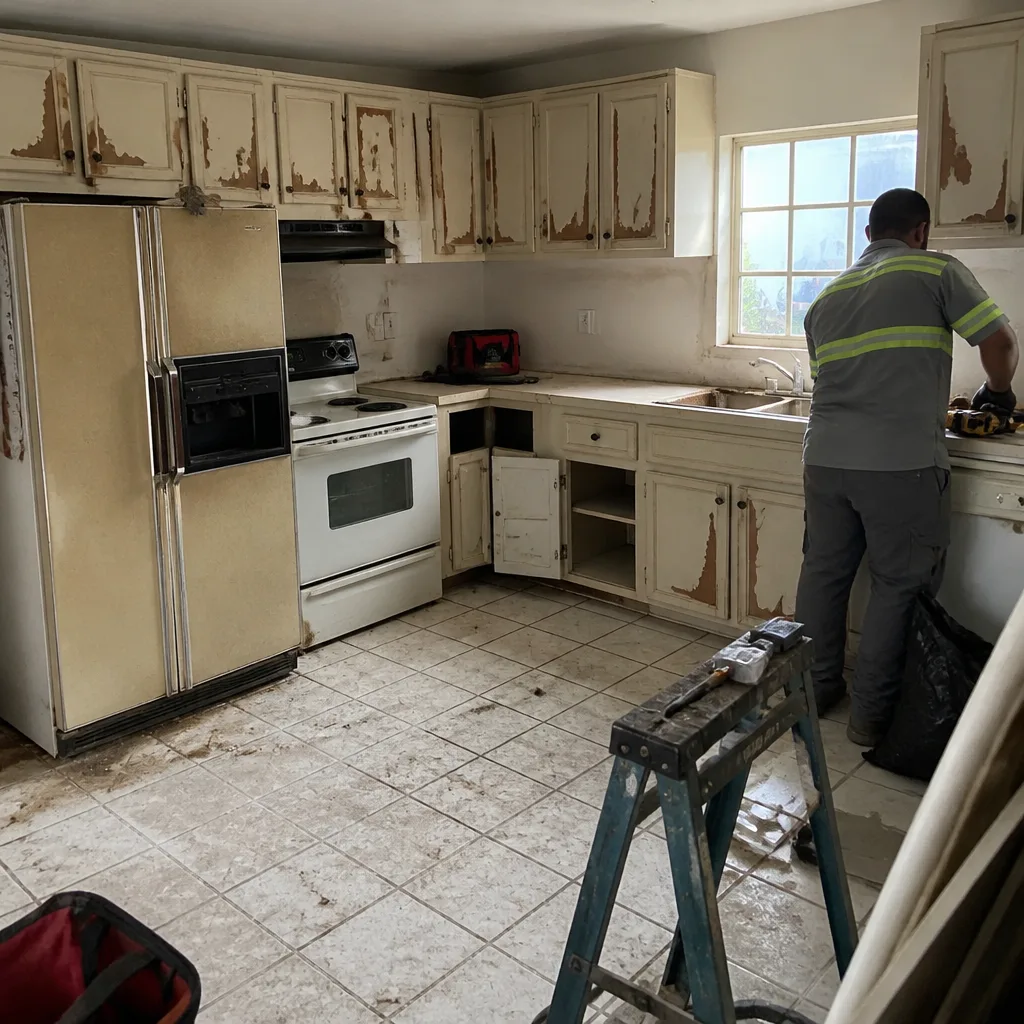 Before
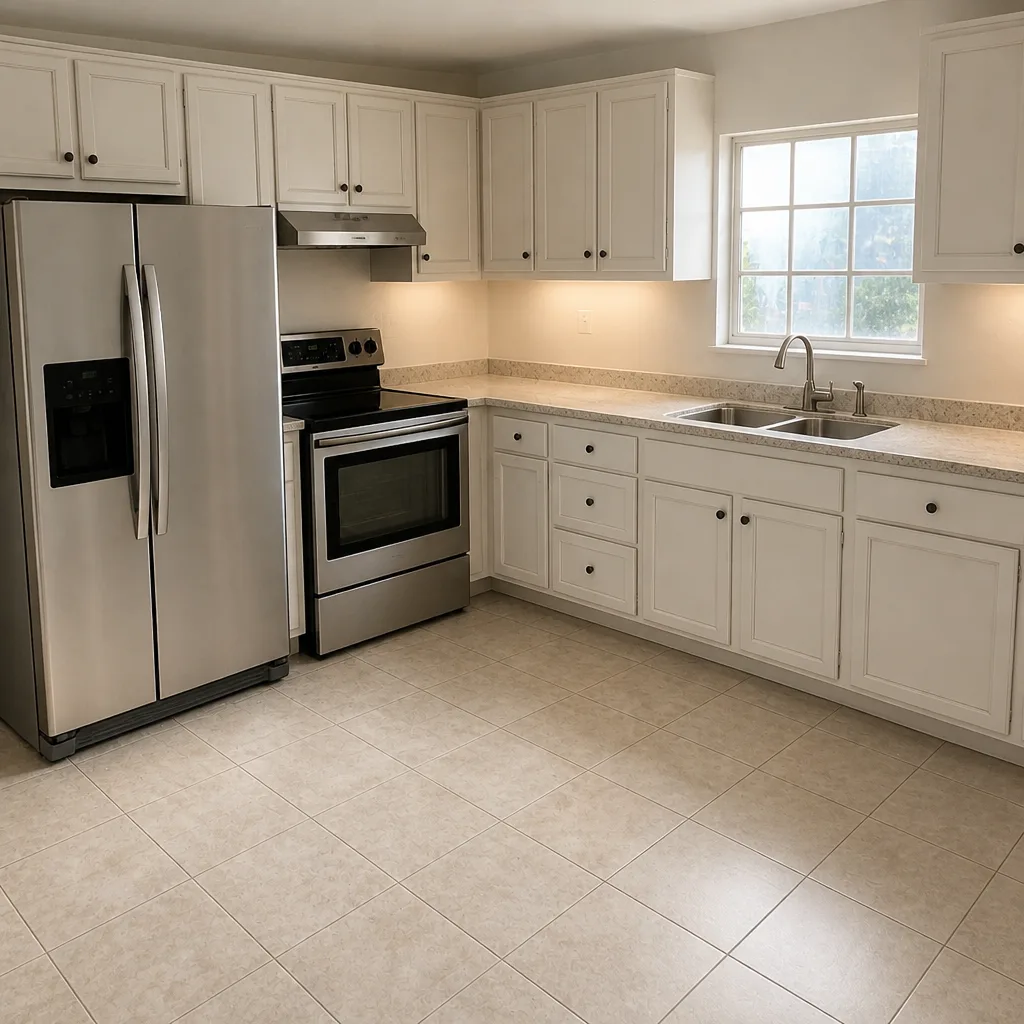 After
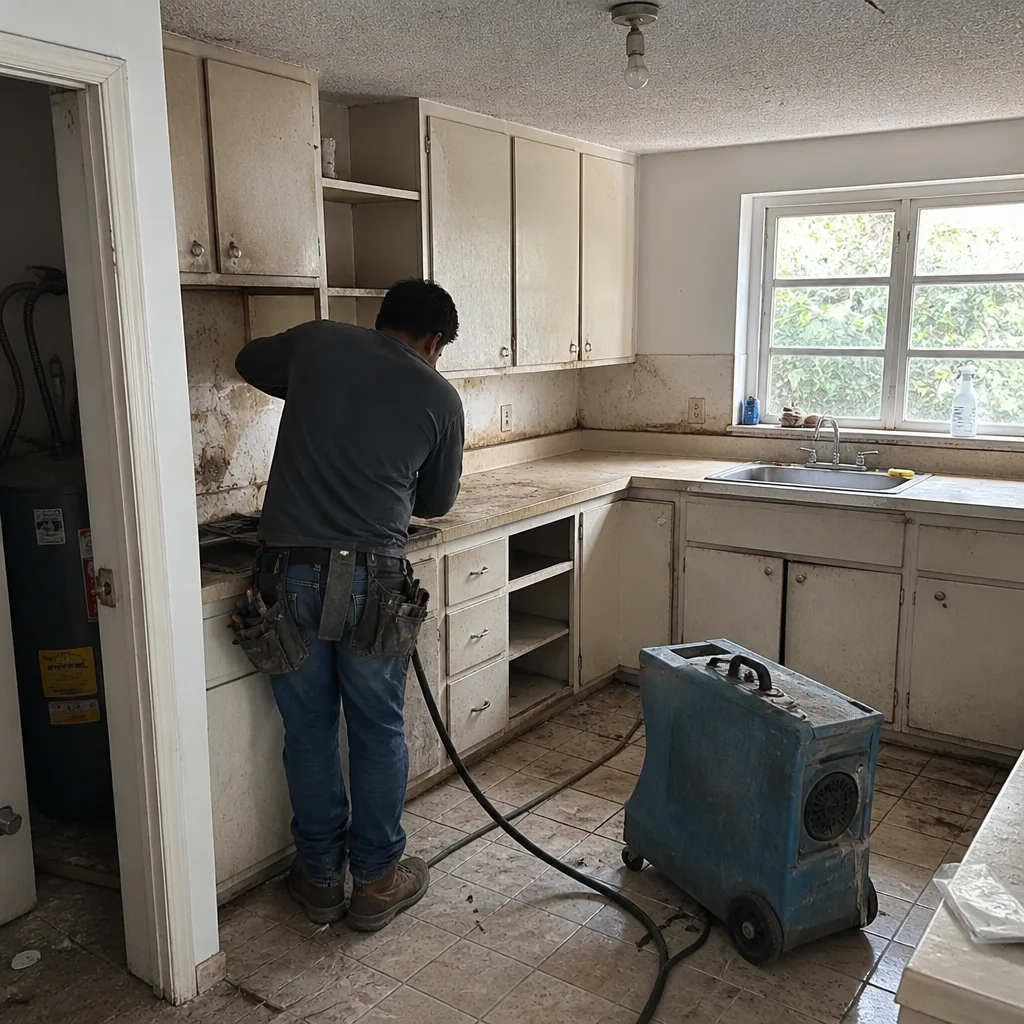 Before
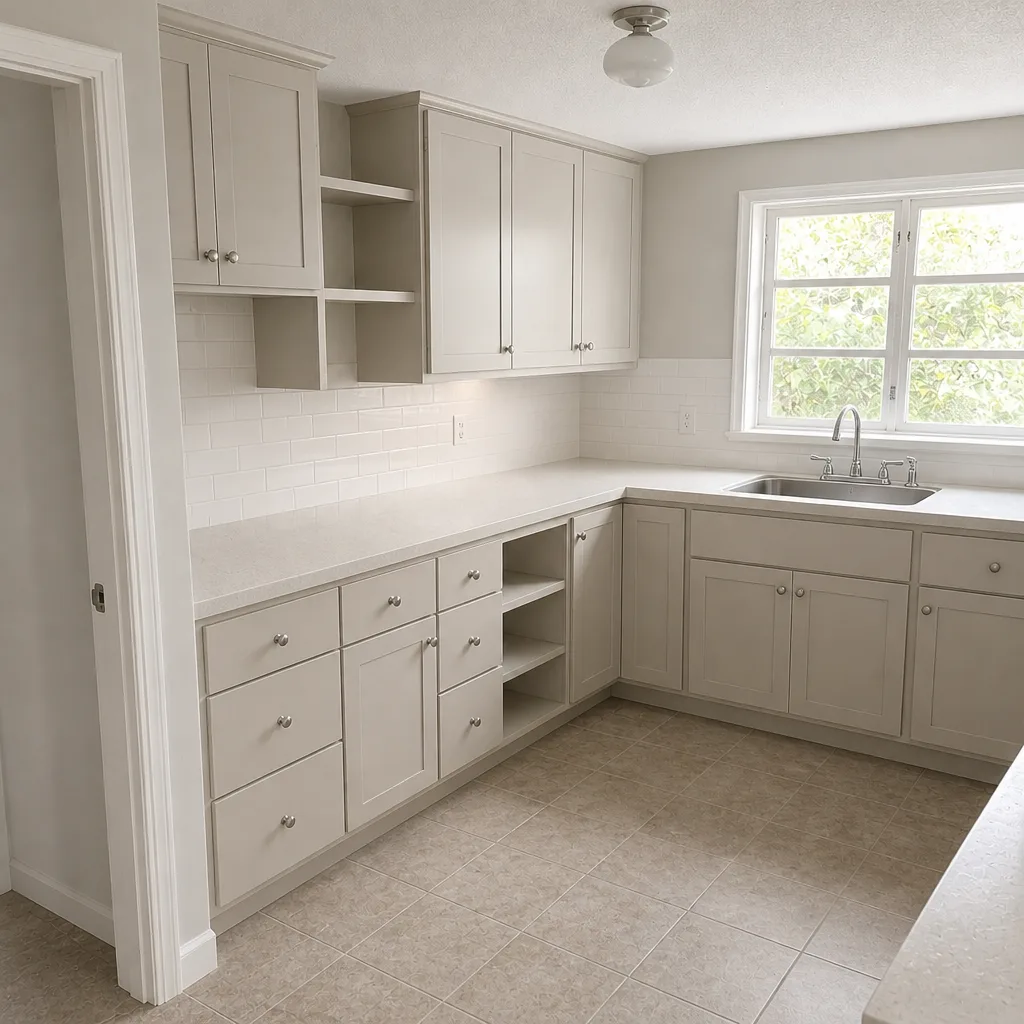 After
When to Call a Professional
Some things you handle yourself – caulk, filters, drain cleaning, hinge adjustments. Others you call in, and calling early is the whole trick. Call a professional when water is showing up where it shouldn’t: a stain on a ceiling, a soft spot near a shower pan, or a caulk gap that keeps returning after you’ve sealed it twice. Call when a door or cabinet won’t stay adjusted, when a fixture drips at its connection, or when the work behind a wall may be failing. And call if you’re unsure whether something is a defect or wear – the guarantee only works if we know about it. Penhallow Remodeling Kendall offers free estimates in Kendall – call (844) 560-5417 and describe what you’re seeing. Our technicians have up to 22 years of experience, and every one is background-checked and arrives in uniform. If it’s covered under the 365-Day Done Right Promise, we fix it at no charge. If it isn’t, you get a written price before any work starts.
Frequently Asked Questions

Check at 30, 60, and 90 days after completion, then twice a year aligned to Kendall’s wet and dry seasons. Fresh caulk shrinks slightly as it cures, and grout at corners and seams is the first place movement shows up. Early checks catch it while it’s cosmetic rather than a water path.
It depends where and why. A seam that was grouted where flexible caulk belongs, or a line that opens shortly after install, is a workmanship issue and falls under the guarantee. A line that’s simply aged and worn after years of use is maintenance. When it’s unclear, call us and describe it – estimates are free.
South Florida humidity causes wood and MDF to swell in the wet months, so a drawer or door that moved freely in February can drag by late summer. Usually it needs a small hinge or guide adjustment, not replacement. If it won’t hold an adjustment within the first year, that’s worth a call.
No. It covers workmanship – how the work was installed – for 365 days, and if a repair fails we come back at no charge with no re-inspection fee. It doesn’t cover normal wear, cleaning, clogged drains, or neglect. Keeping a dated maintenance log is the simplest way to show which is which.
Pull your permit record through Miami-Dade County’s online system and confirm a final inspection and sign-off are recorded for each permitted project. Do this once a year. A permit left open can affect a future sale or insurance claim, and it takes minutes to check.
Re-seal opening caulk lines, verify bath exhaust fans, check exterior window and door sealant, clear patio drains, and top off paver joint sand after heavy rain. Do it in the dry weeks before the wet season starts, usually early May, so you’re not sealing in the middle of a storm.
The Bottom Line
A remodel isn’t maintenance-free – it’s maintenance on a schedule, and the schedule in Kendall runs on humidity, rain, and salt air rather than the national calendar. Do the 30-60-90 day checks, then settle into two seasonal checkpoints a year and one annual permit-record review. Keep a dated log with photos. Know the line between workmanship failures, which the 365-Day Done Right Promise covers, and normal wear, which is yours. Catch things small and early, and the finishes that made your remodel worth it stay that way. Call (844) 560-5417 for a free estimate.
Written by the team at Penhallow Remodeling Kendall.