
Last updated November 18, 2026








Free written scope consultation - allowances, timeline, and change-order rules on paper before a single trade is scheduled
Kitchen Remodeling Maintenance Schedule: What to Do and When
Quartz countertops get sold as maintenance-free, and that word does a lot of quiet damage. The surface itself is tough, but the caulk seam where the counter meets the backsplash is not, and in a South Florida kitchen where the AC cycles all day, that seam works harder than the manufacturer’s national guidance assumes. Skip it and you don’t just get a grimy line of silicone. You can void a warranty you never knew you had. What follows is the owner’s manual your remodel should have come with: a real calendar for cabinets, counters, grout, fixtures and exhaust, tuned for Kendall homes, plus the 11-month walkthrough that protects your workmanship guarantee.
Quick Answer
A remodeled kitchen needs light maintenance monthly, deeper service quarterly, and a full inspection once a year. The tasks that matter most are resealing counter seams and backsplash caulk, re-grouting or sealing tile, tightening and lubricating cabinet hardware, cleaning the exhaust duct and filter, and checking supply lines and shutoffs for slow leaks. In Kendall’s humidity and heavy AC use, shorten the manufacturer’s recommended intervals for caulk and grout rather than stretching them.
Styles & brands we work with
- Kitchen remodeling
- Bathroom remodeling
- Home additions & ADU
- Roofing
- Windows & doors
- Driveway & pavers
- Fence
Table of Contents
- The Monthly Maintenance Checklist
- Quarterly Tasks: Grout, Seams and Exhaust
- The Yearly Deep Service
- South Florida Adjustments: Humidity, AC and Hard Water
- Which Tasks Keep Your Manufacturer Warranties Active
- The 11-Month Walkthrough Before Your Guarantee Expires
- Documentation Habits That Protect You Later
- Common Mistakes to Avoid
The Monthly Maintenance Checklist
Monthly upkeep takes about twenty minutes and it’s the difference between a kitchen that looks new at year five and one that looks tired at year three. None of these tasks require tools beyond a screwdriver and a soft cloth. What they require is a habit.
- Wipe down cabinet faces and pulls with a damp cloth and mild dish soap. Skip abrasive cleaners and skip anything with wax, which traps grease on painted and laminate fronts.
- Tighten cabinet hinges and drawer glides with a screwdriver. Loose hardware is the number-one cause of doors that sag out of alignment and start rubbing the frame.
- Inspect the caulk seam between countertop and backsplash. Run a fingertip along it; if you feel a gap, a crack, or any give, it needs attention before water gets behind it.
- Check under the sink for dampness around the supply lines, the P-trap, and the disposal flange. A paper towel wiped along the joints will show a slow weep long before it shows on the cabinet floor.
- Clean the range hood filter in hot soapy water, or run it through the dishwasher if the manufacturer allows it.
- Look at the grout lines around the sink and backsplash for dark spots or crumbled sections.
In Kendall, we tell homeowners to add one thing to the monthly list: open the cabinet doors under the sink for a minute after a heavy rain week and feel the cabinet floor. South Florida humidity finds its way in, and a cabinet that feels tacky or cool to the touch is telling you something.
Quarterly Tasks: Grout, Seams and Exhaust
Every three months, go a layer deeper. This is where most of the warranty-relevant work lives.
Countertop seams and backsplash caulk
Caulk is a wear item, not a permanent seal. It shrinks, it cracks, and in a kitchen with constant AC-driven temperature swings it flexes more than it would in a milder climate. Plan to inspect the seam quarterly and replace it every 12 to 18 months in Kendall, versus the 2 to 3 years a manufacturer may suggest for a drier region. A $6 tube of kitchen-and-bath silicone and an hour of your time covers it. If the caulk has failed and water has already gotten behind the counter edge, that’s a call to a professional before the substrate (the layer under the counter that carries the load) starts to swell.
Grout cleaning and sealing
Grout is porous. Seal it every 12 to 18 months on floors, and every 6 to 12 months on the backsplash behind the range where grease and steam land. Test whether it needs resealing by dripping a few drops of water on a grout line: if the water beads, the sealer is holding; if it soaks in dark, it’s time.
Exhaust and ventilation
Clean the duct run and check the exterior damper. Grease buildup in a duct is both a performance problem and a fire risk. If your hood vents to the outside, confirm the flap opens freely when the fan runs. A damper stuck shut pushes moisture and grease back into the room.
Fixtures and shutoffs
Turn every supply shutoff valve under the sink and behind the fridge a quarter turn and back, once a quarter. Valves that never move seize up. When you need one in an emergency, a seized valve is a flood waiting to happen. Moen and Delta faucets both publish care instructions for their finishes; follow them and the finish outlasts the faucet.
The Yearly Deep Service
Once a year, block out a Saturday morning and work through the kitchen top to bottom. This is also the ideal time to photograph everything for your records.
- Pull the fridge and range away from the wall and clean behind them. Check the floor for water staining near the fridge’s water line.
- Inspect cabinet interiors for moisture, warping, or sagging shelves. Tighten shelf pins and check that the cabinet boxes are still plumb to the wall.
- Deep-clean and reseal stone counters if your material requires it. Cambria quartz does not need sealing; granite and some natural stones do. Know which you have before you touch it.
- Re-caulk any seam that showed wear during the year.
- Clean the exhaust duct and confirm the fan’s airflow is strong. A hood that’s gotten weak is usually a clogged duct or a failing motor, not imagination.
- Check the dishwasher supply line and drain hose for cracking. These are common slow-failure points.
- Look at the tile field for cracked tiles or hollow-sounding spots (tap gently with a screwdriver handle). A hollow tile means the thinset has released, and it can spread.
If your remodel included a Kitchen Remodeling in Kendall project with us, this annual pass is also when you’d want to note anything that looks off, in writing, with dates. That record becomes valuable if a claim ever comes up.
South Florida Adjustments: Humidity, AC and Hard Water
Kendall’s climate changes the maintenance math, and most generic checklists ignore it entirely.
Humidity and wood cabinet movement
Wood moves. In a region where outdoor humidity sits high most of the year and indoor AC keeps things cool and dry, cabinet doors and drawers expand and contract seasonally. That’s normal. What isn’t normal is binding doors in summer and gaps in winter, which signals either a humidity imbalance indoors or a hinge alignment issue. Keep indoor humidity in the 40 to 55 percent range and the movement stays modest. If your cabinets are KraftMaid or Wellborn, both publish humidity guidance for their lines; read it.
Grout in high-AC environments
Constant AC means constant small temperature swings and steady air movement, which dries grout and caulk faster than a home without central air. That’s why Kendall grout sealing intervals run shorter than the national average. It also means the caulk seam behind the sink is the first place you’ll see a hairline crack.
Stainless sinks and hard water
Kendall’s water supply runs on the harder side in many neighborhoods, and hard water leaves mineral spots on stainless that etch if left. Wipe the sink dry after use and use a stainless-specific cleaner once a week. A Blanco or American Standard sink will last decades with that habit and stain in a couple of years without it. For fixtures, a Kohler finish will hold up well, but mineral buildup left to sit will dull any finish eventually.
Which Tasks Keep Your Manufacturer Warranties Active
Here’s the part most homeowners never hear: a lot of warranty coverage is conditional. Manufacturers write maintenance requirements into their warranties and then, if a claim comes in, they ask what you did. A countertop stain claim goes nowhere if the documentation says the stone needed annual sealing and you never sealed it.
The practical steps:
- Read the care section of every product manual that came with the kitchen. Cabinets, counters, fixtures, and appliances each have their own language, and it’s usually buried in the last few pages.
- Note the required interval for each item (sealing, cleaning, filter changes) and put it on a calendar. If the manual says “seal annually,” seal annually, not when you remember.
- Keep receipts for the products you buy to do the maintenance. A dated receipt for sealer is proof you did the work.
- Never use an abrasive or acidic cleaner on a finish the manual says to clean with mild soap. This is the fastest way to void a finish warranty. Moen, Delta, Blanco and American Standard all publish specific cleaner guidance.
- Report defects early. Most warranties require notification within a defined window after you notice a problem. Waiting a year to report a finish failure can push you past the claim deadline.
We’ve seen a homeowner lose a countertop finish claim over a cleaner choice the manual explicitly warned against. Two minutes of reading would have saved that claim.
The 11-Month Walkthrough Before Your Guarantee Expires
Your workmanship guarantee has a window. The Penhallow 365-Day Done Right Promise covers the work for a full year: if it’s not done right, we come back and make it right, in writing, at no charge. Most remodeling guarantees run on a similar one-year timeline. That means you want to do a deliberate inspection at about month eleven, while you can still file a legitimate claim.
Here’s the list to walk through at month eleven:
- Open and close every cabinet door and drawer and note any that bind, rub, or don’t sit flush. Soft-close hinges that have lost their dampening are a legitimate claim.
- Press along every counter seam and backsplash joint. Any separation, cracking, or lifting is worth noting.
- Tap tile and listen for hollow spots. Hollow means the bond has failed.
- Run every fixture, faucet and disposal and check for drips, slow drains, or loose handles.
- Check the exhaust fan for airflow and noise.
- Look at paint and trim joints at the ceiling and floor. Cracking in the first year can indicate settling or a joint that wasn’t filled properly.
- Photograph everything you find, with the date visible, and send it in writing before the guarantee window closes.
This is the legitimate way to use the last month of a guarantee. It’s also why we encourage homeowners to keep a running list all year, because a defect you noticed in month four and never reported is harder to resolve in month eleven. Call (844) 560-5417 and a real person answers, day or night, if you’re unsure whether something is claimable.
Documentation Habits That Protect You Later
Warranty disputes are won with records, not memory. Four habits cover almost everything:
- A photo folder on your phone for the kitchen, with a photo of every product label, model number, and the date of installation. Take the photo the day the item goes in, not later.
- A simple maintenance log (a notes file is fine) that records the date of every sealing, caulking, cleaning, and filter change.
- Receipts saved for products used in maintenance.
- Written notice of any defect, sent by email or text with a photo and date, rather than a phone call you can’t prove.
If you ever sell the house, this file becomes a selling point. A buyer who sees a maintained kitchen with records will trust the remodel more than one with no history at all.
Common Mistakes to Avoid
- Assuming quartz means zero maintenance. The surface doesn’t stain easily, but the seams and caulk around it are wear items that need the same care as any other counter.
- Stretching caulk replacement past 18 months in Kendall. AC-driven flexing cracks silicone faster here than the national recommendation assumes; replace it on the shorter schedule, not the longer one.
- Using an all-purpose cleaner on stone or a finish-heavy faucet. Acidic and abrasive cleaners can dull a Kohler or Moen finish and can void the finish warranty outright.
- Never turning the supply shutoff valves. A valve that hasn’t moved in five years can seize and fail when you finally need it during a leak.
- Ignoring a hollow-sounding tile. A tile that’s released from the substrate will crack and can let water behind it; catching it early is a small repair, catching it late is a tear-out.
- Skipping the exhaust duct cleaning. Grease in the duct is a fire risk and a performance drain, and it’s the task most often forgotten.
- Not reading the product manuals at all. The maintenance requirements that keep warranties active are in the documents that came with your cabinets, counters and fixtures, and most homeowners never open them.
See the difference
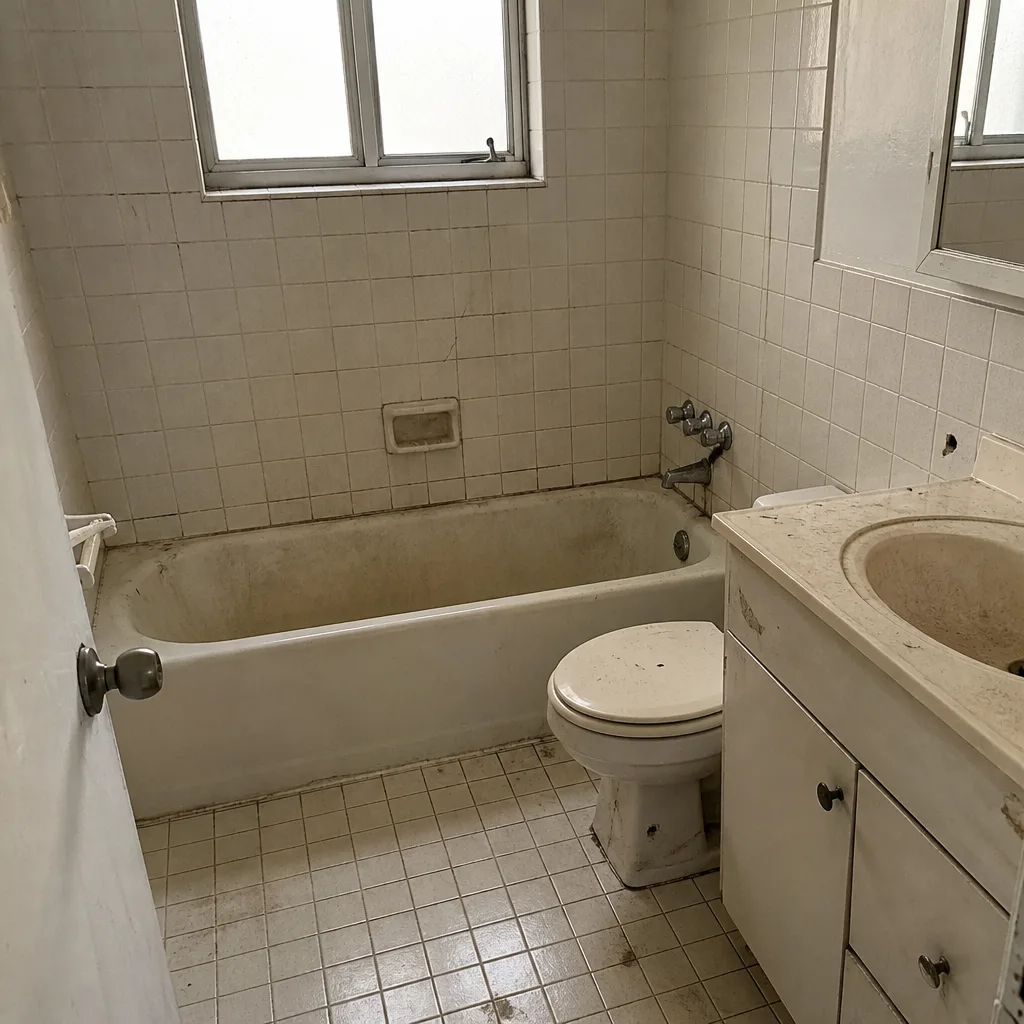 Before
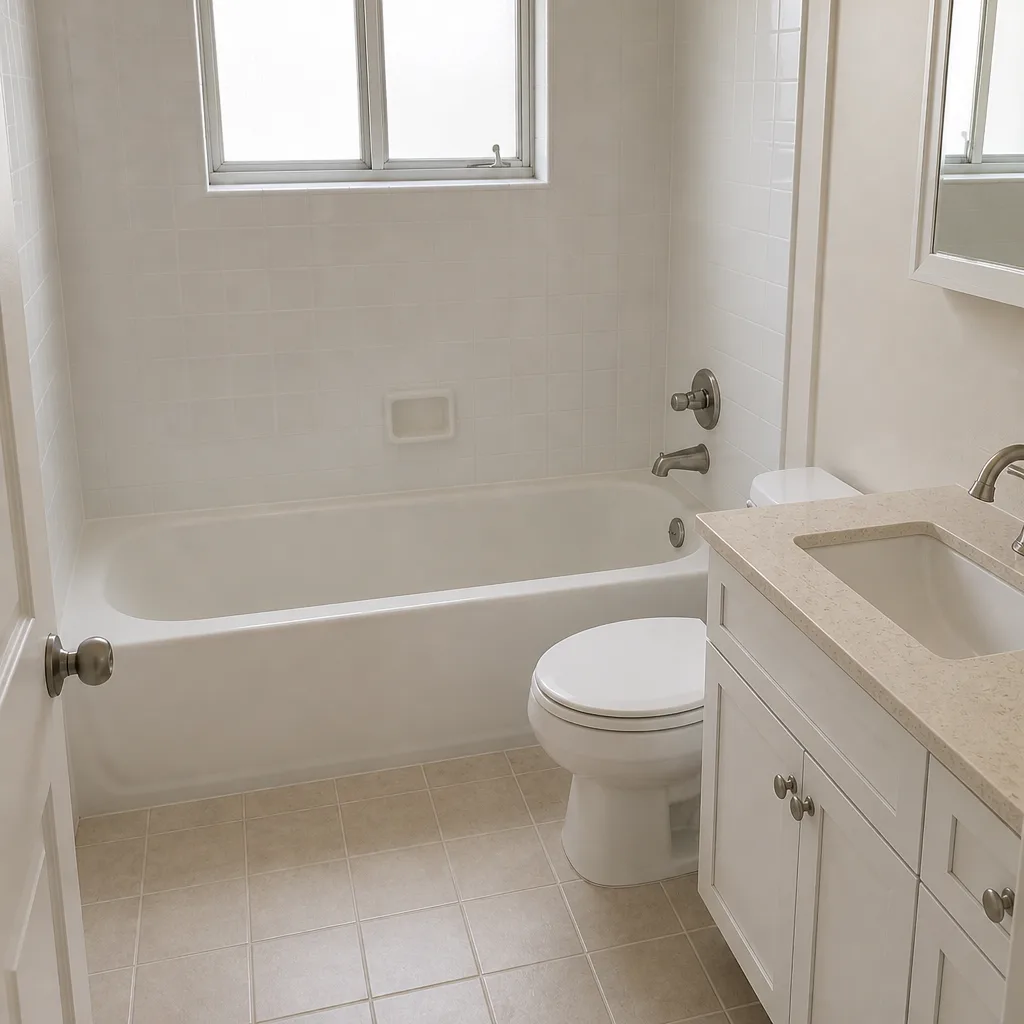 After
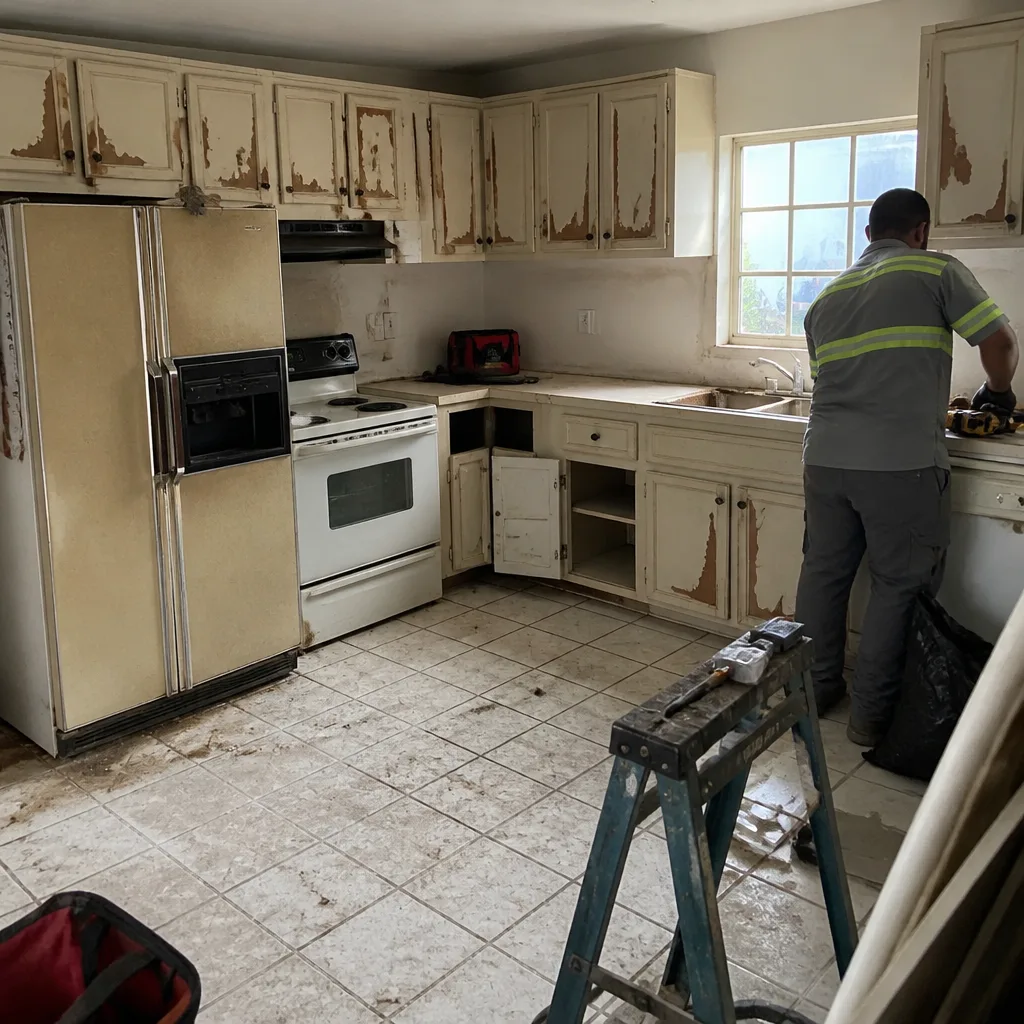 Before
 After
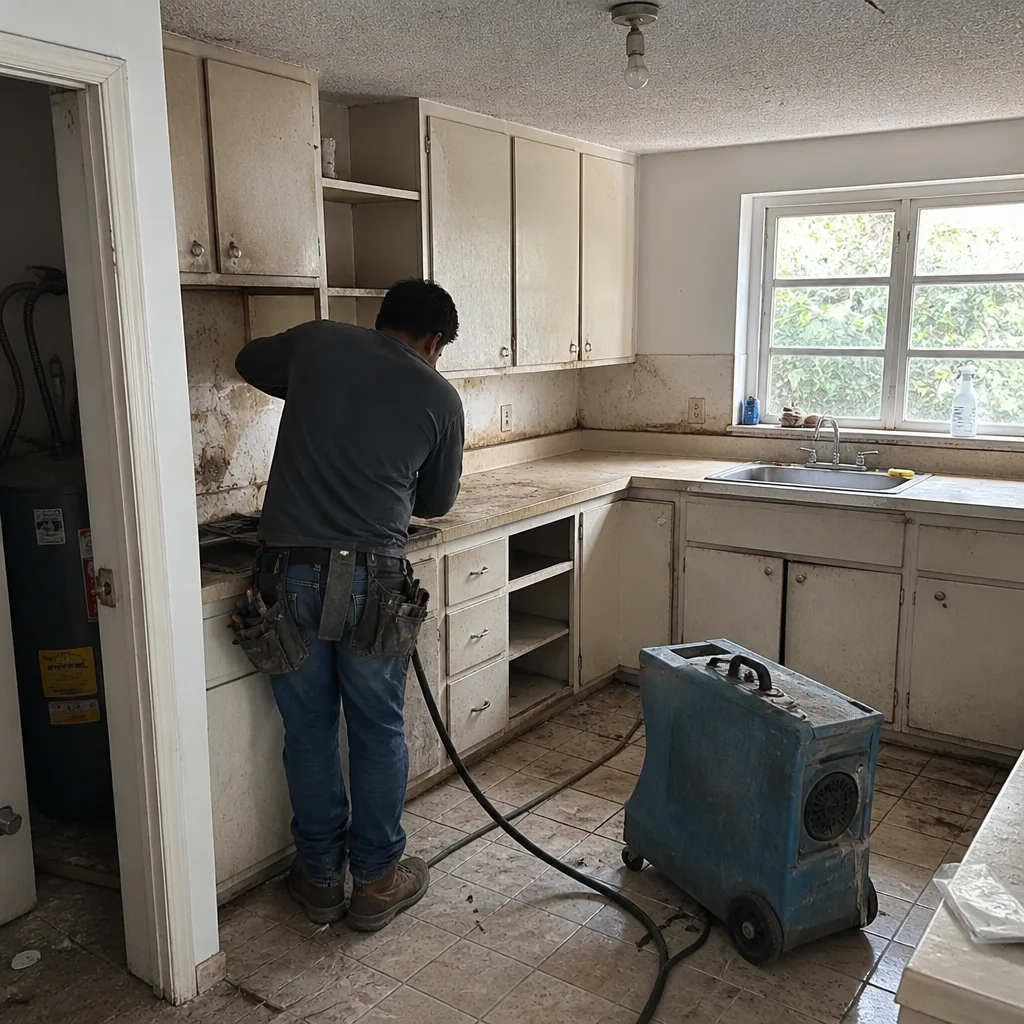 Before
 After
When to Call a Professional
Some maintenance is homeowner work. Some isn’t. Call a professional for water that’s gotten behind a counter or backsplash and swelled the substrate, for hollow or cracked tile that’s spreading, for a cabinet box pulling away from the wall, for a leaking or seized supply valve, and for any exhaust duct problem that isn’t a filter cleaning. Electrical work inside a hood or under-cabinet lighting is not a DIY job, and neither is anything involving the gas line to a range. For these, a trained professional protects both your home and your warranty. If you’re in the middle of planning a remodel or a repair and want a written number before anything starts, Penhallow Remodeling Kendall offers free estimates in Kendall. Call (844) 560-5417.
Frequently Asked Questions
Every 12 to 18 months on floors and every 6 to 12 months on the backsplash behind the range. Kendall’s heavy AC use and humidity dry grout faster than milder climates, so stay on the shorter end of the manufacturer’s recommendation. Test with a few drops of water: if it beads, the sealer is holding; if it soaks in dark, reseal. Call (844) 560-5417 for a free estimate if you need grout restored rather than just sealed.
Yes, just not the kind you’d expect. Cambria and similar quartz don’t need sealing, but the caulk seam between the counter and backsplash needs inspection every few months and replacement every 12 to 18 months in South Florida. That seam is a wear item even when the surface isn’t. If a seam has failed and water has gotten behind it, call (844) 560-5417 for a free estimate on the repair.
It can. KraftMaid and Wellborn both publish humidity and care guidance, and a warranty claim can be denied if the cabinets weren’t kept in the recommended humidity range or cleaned with the wrong products. Keep indoor humidity between 40 and 55 percent and follow the care section of the manual. If you’re unsure what your cabinets require, call (844) 560-5417 and we’ll point you to the right document.
Every cabinet door and drawer for binding or failed soft-close hinges, every counter seam for separation, every tile for hollow spots, every fixture for drips, and the exhaust fan for airflow. Photograph anything you find with the date and submit it in writing before the window closes. The Penhallow 365-Day Done Right Promise covers the work for a full year; call (844) 560-5417 if you’re not sure whether something is claimable.
Wipe the sink dry after every use and clean weekly with a stainless-specific cleaner. Hard water leaves mineral spots that etch into the surface if left to sit, and a Blanco or American Standard sink will hold its finish for decades with that habit and stain within a couple of years without it. If hard-water damage has already set in, call (844) 560-5417 for a free estimate on refinishing or replacement.
Both. The filter needs cleaning monthly, and the duct run needs cleaning annually because grease builds up inside it and becomes a fire risk. Confirm the exterior damper opens freely when the fan runs, since a stuck damper pushes moisture and grease back into the kitchen. If airflow has dropped noticeably, call (844) 560-5417 for a free estimate on service.
The Bottom Line

A remodeled kitchen isn’t a finished object; it’s a system that needs a calendar. Monthly wiping and tightening, quarterly caulk and grout checks, an annual deep service, and a documented 11-month walkthrough before your workmanship guarantee expires cover almost everything. In Kendall specifically, shorten the manufacturer’s intervals for caulk, grout and humidity-sensitive cabinets, because the AC and humidity here work the materials harder than the national guidance assumes. Read the manuals, keep the records, and file claims while you still can. Your kitchen will hold up for years and the warranties will stay intact.
If your kitchen needs a repair or a full remodel and you want a written price before any work starts, Penhallow Remodeling Kendall is here. Our technicians have up to 22 years of experience, every job comes with a written guarantee and the 365-Day Done Right Promise, and we source materials from brands like Moen, Blanco and Delta. Call (844) 560-5417 for a free estimate, and a live person will answer day or night. You can also explore our Penhallow Remodeling Kendall home page or learn about General Contractor services in Kendall and Bathroom Remodeling in Kendall if you’re planning work beyond the kitchen.
Written by the team at Penhallow Remodeling Kendall.