Last updated November 18, 2026






Free written scope consultation - allowances, timeline, and change-order rules on paper before a single trade is scheduled
DIY vs Professional Home Remodeling: What’s Safe to Do Yourself
A homeowner in Kendall can retile a powder-room backsplash on a Saturday and save real money. That same homeowner can frame a new closet, pull the electrical for it, and unknowingly create a problem that stops a future sale cold. The line between those two weekends isn’t about how handy you are. It’s about what Miami-Dade County’s building code legally allows you to do to your own house, and what requires a licensed contractor’s signature on the permit. Confuse the two and you can void an insurance claim, trigger a stop-work order, or discover at closing that your finished addition was never legal. This guide walks through exactly where that line sits in Kendall, which jobs are genuinely safe to take on, and how to tell the difference before you buy a single tool.
Quick Answer
In Miami-Dade County, you can legally handle cosmetic work yourself – painting, cabinet hardware, backsplash tile in dry areas, switching out a faucet – but anything touching electrical circuits, gas lines, plumbing rough-in, or structural framing requires a licensed contractor and a permit. The permit is the real dividing line, not skill level. Unpermitted or unlicensed work can void your homeowner’s insurance for related damage and surface during a home inspection, often costing far more to fix than the licensed job would have cost to begin with.
Styles & brands we work with
- Kitchen remodeling
- Bathroom remodeling
- Home additions & ADU
- Roofing
- Windows & doors
- Driveway & pavers
- Fence
Table of Contents
- Where Miami-Dade Draws the Line: Permit Categories
- What’s Actually Safe to Do Yourself in Kendall
- The Three-Question Decision Tree
- How Unpermitted Work Shows Up in a Home Inspection
- The Insurance Gap Nobody Warns You About
- Why Kendall’s Humidity Changes the DIY Math
- What DIY Really Costs vs Hiring Out
- When to Call a Professional
Where Miami-Dade Draws the Line: Permit Categories
Miami-Dade County runs one of the stricter building departments in Florida, and that matters in Kendall because the county enforces the code uniformly across unincorporated areas and municipalities alike. The county classifies work into tiers, and each tier carries a different legal requirement about who can perform it.
Owner-builder work. Florida law lets a homeowner pull certain permits as an “owner-builder” and do the work themselves on a property they occupy. This is real – but narrow. It covers things like fences, minor repairs, and some finish work, and it comes with a signed affidavit that puts the liability squarely on you. It does not cover electrical, mechanical, plumbing, or structural work that requires a licensed trade.
Licensed-trade work. The following categories require a licensed professional in Miami-Dade, by law, no matter how capable you are:
- Electrical – new circuits, panel changes, outlet additions, anything past a like-for-like fixture swap
- Plumbing – moving supply or drain lines, water heater replacement, anything requiring a rough-in inspection
- Gas – all gas line work, including hookups and reroutes
- Structural – removing or moving load-bearing walls, new beams, headers, foundation work
- Roofing – full replacements and structural roof repairs
- HVAC – system changes, ductwork, refrigerant work
The practical takeaway: a permit isn’t paperwork that gets in the way of a good remodel. It’s the county’s record that the work was inspected and meets code. Skip it on a structural job and you’ve built something the county doesn’t know exists – which becomes the county’s problem and yours the day you try to sell the house. For jobs that cross into licensed-trade territory, a General Contractor in Kendall coordinates the trades, pulls the permits, and schedules the inspections so the record stays clean.
What’s Actually Safe to Do Yourself in Kendall
Plenty of remodeling work is genuinely within reach for a careful homeowner, and doing it yourself saves real money. The jobs below share a common trait: they’re cosmetic, they don’t touch a system, and they don’t require a permit in Miami-Dade.
Painting. Interior and exterior painting is the highest-value DIY job on the list. No permit, no licensed trade, and a decent result with patience and proper prep. The one caveat in Kendall: our humidity means you need to address moisture and mildew before painting, or the new coat blisters within a season.
Cabinet hardware and refacing. Swapping knobs and pulls, installing soft-close hinges, even painting or refacing cabinet doors is well within DIY reach. It’s a fraction of the cost of new cabinetry and doesn’t require a permit. If you eventually want full replacement with a brand like KraftMaid or Wellborn, that’s a different project – but the hardware stage is yours to own.
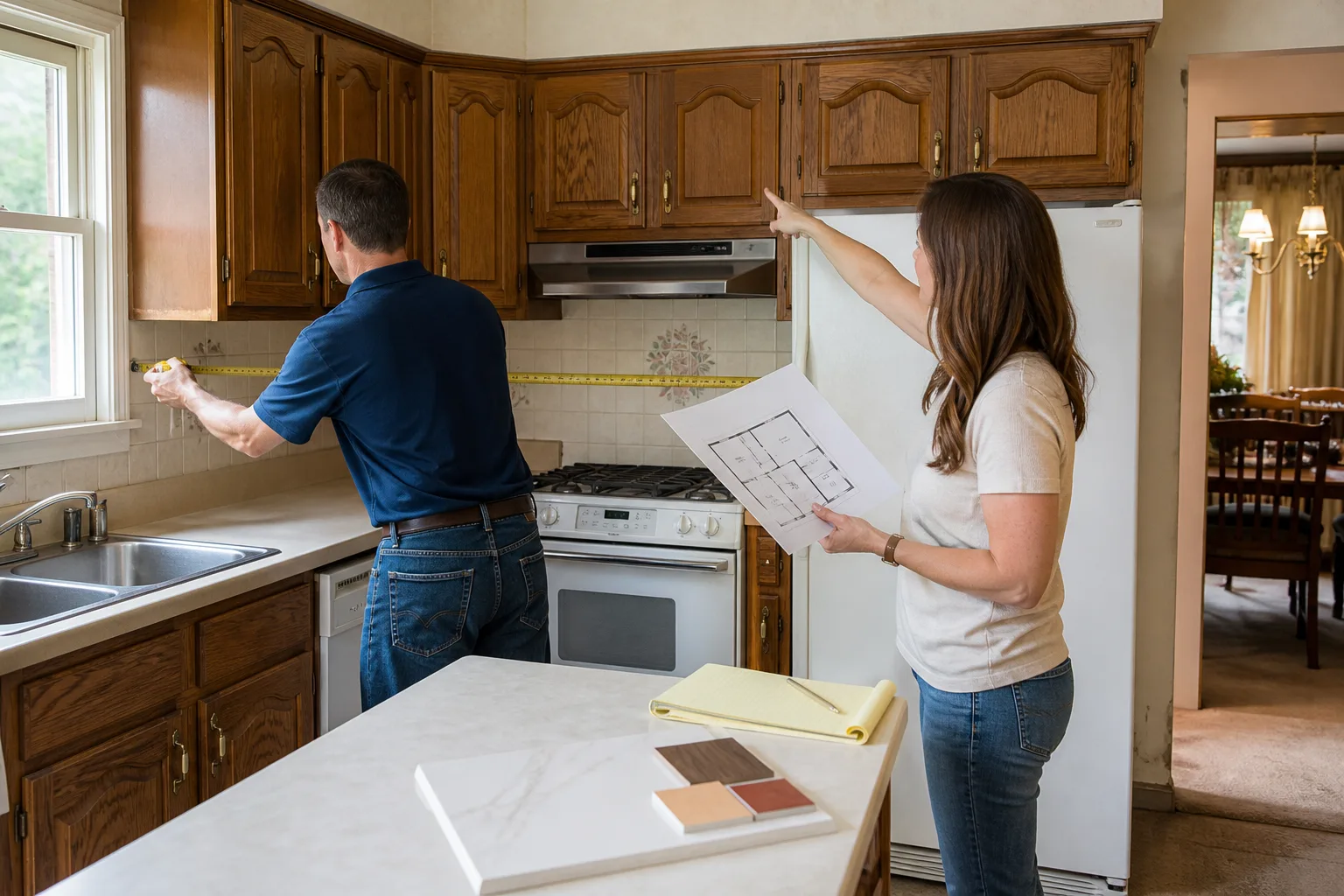
Backsplash tile in dry areas. Tiling a kitchen backsplash or a non-shower accent wall is a fair DIY project. The tile itself isn’t the hard part; the substrate is. Cement board substrate (the moisture-resistant layer behind the tile) has to be installed correctly, and in Kendall’s climate, an improperly prepped wall traps moisture and grows mold fast.
Fixture swaps that are genuinely like-for-like. Replacing a faucet with an identical-connection model, swapping a light fixture on an existing circuit, or hanging a shelf – all reasonable. The moment you’re adding a circuit or moving a drain, stop.
Landscaping and hardscape touch-ups. Paver repair, planting, and mulch work are safe and unregulated.
What’s NOT safe and not legal: any wall change, any new plumbing line, any electrical work past a fixture swap, any gas work, and any shower pan or shower tile assembly. That last one is the one DIYers underestimate most – a shower that leaks behind the tile fails invisibly and rots the framing before you see a stain.
The Three-Question Decision Tree
Before you commit to a project, run it through three questions. If the answer to any of them is yes, that’s your signal to bring in a licensed professional.
- Does this job touch electrical, plumbing, or gas? If yes – stop. Add a circuit, move a drain, run a gas line: all licensed-trade work in Miami-Dade. Even a “small” addition like a bathroom fan vented through the roof is mechanical work that needs a permit.
- Does this job change anything structural? Removing a wall, adding a beam, opening a floor plan, changing a header – all structural. A wall that looks cosmetic may be load-bearing, and in a block-and-stucco home the way it’s built can be less obvious than in a wood-frame house.
- Will this job be visible or documented when the house sells? Finished square footage, bathrooms, kitchens, and additions all get inspected at sale. If the work required a permit and you didn’t pull one, that discrepancy will be found during a title search or a home inspection.
If all three answers are no – the job is cosmetic, doesn’t touch a system, and isn’t the kind of thing that gets inspected – you’re in DIY territory. Go carefully, prep properly, and use materials rated for Kendall’s humidity. For a job that crosses any of those lines, a Kitchen Remodeling in Kendall or bathroom contractor handles the permit, the inspection, and the liability that comes with getting it right.
How Unpermitted Work Shows Up in a Home Inspection
You don’t have to be an inspector to spot unpermitted work, and neither does a buyer’s inspector. The signs are predictable, and in Kendall’s housing stock they show up in fairly consistent places.
- Electrical panels with unlabeled breakers or double-tapped circuits. A telltale sign of homeowner electrical work. Inspectors flag them, and a buyer’s lender may require a licensed electrician to redo the panel before closing.
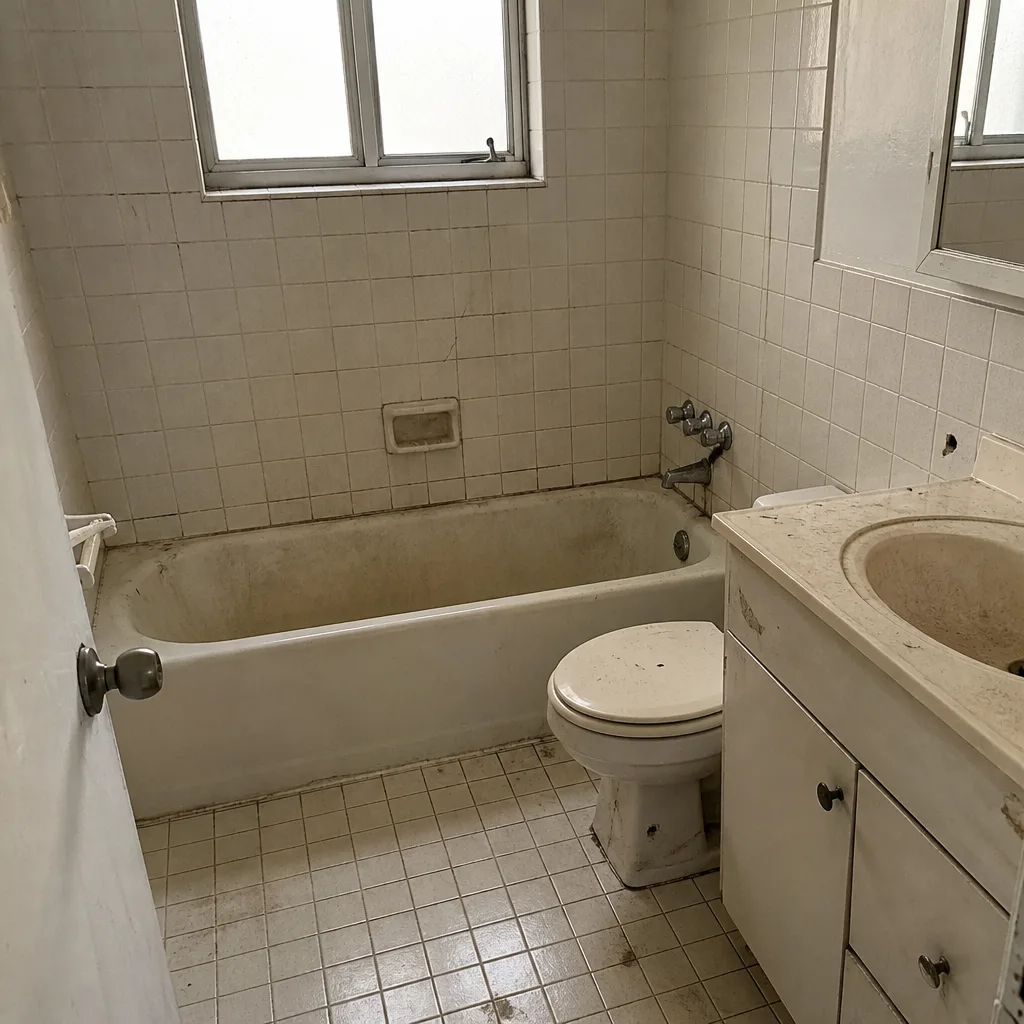
- New bathroom tile with no corresponding permit record. A 2023 vanity and shower job that doesn’t show up in the county’s permit database is a red flag. Best case, the buyer asks for a discount; worst case, the sale stalls.
- Additions that don’t match the tax records. A new bedroom or expanded kitchen that isn’t reflected in the county’s assessed square footage is almost certainly unpermitted. This is the expensive one – remediation can mean tearing out walls to expose framing for inspection, or worse.
- Structural walls removed with no beam or header. A visual giveaway is a sagging ceiling line or a header too small for the span. An inspector who spots it will recommend a structural engineer, and the buyer’s offer usually evaporates.
- Plumbing moved without a rough-in inspection record. A relocated bathroom fixture with no inspection history in the county file raises a question the seller has to answer.
When unpermitted work is found, the remediation path is rarely cheap. The common outcomes are: pull an after-the-fact permit and open walls for inspection, tear out and redo the work, or negotiate a credit to the buyer. A $3,000 DIY shower remodel can turn into a $12,000 remediation before a sale. That math is why the permit exists in the first place.
The Insurance Gap Nobody Warns You About
Here’s the scenario that catches Kendall homeowners off guard. You do a bathroom remodel yourself, skipping the permit. The shower pan fails six months later and water seeps into the wall and the subfloor. You file a claim with your homeowner’s insurance. The adjuster asks whether the work was permitted and inspected. You answer honestly. The claim is denied or reduced, and the damage is suddenly your responsibility.
Most homeowner policies have an exclusion for damage caused by work that wasn’t done to code, or that was done without the required permit. Insurers know unpermitted work is higher risk because it wasn’t inspected. When the cause of the damage is the unpermitted work itself, the policy may not respond at all. The result: the same homeowner who saved $800 on labor pays $15,000 out of pocket for water and mold remediation.
The gap isn’t a loophole – it’s a structural feature of how insurance handles risk. The permit and inspection record is the insurer’s evidence that the work was done properly. No record, no coverage for that cause of loss. This is the single strongest argument for licensed work on anything past cosmetic. A written guarantee from a licensed contractor plus a clean permit record is worth more than the savings from doing it yourself, especially on water-adjacent work in a climate where moisture damage is common.
Why Kendall’s Humidity Changes the DIY Math
Kendall’s climate is subtropical, and it matters to this decision in ways it wouldn’t in Phoenix or Denver. High humidity and near-year-round warmth mean moisture damage is faster, mold is more likely, and the margin for error on wet-area work is smaller.
That changes the DIY math on three fronts. First, prep work matters more. A backsplash installed over the wrong substrate in a Kendall kitchen may hold for a year and then fail. Second, wet-area projects that would be a “maybe” in a dry climate are a “don’t” here – shower pans and shower tile assemblies belong to the licensed trade. Third, drying time and material selection are climate-specific. A contractor who works in Kendall’s climate every day knows which adhesives, moisture barriers, and ventilation approaches actually hold up, and which fail within a season. A general rule of thumb: if the project involves water in any form – plumbing, a shower, an exterior wall – have someone who does this in this climate, in this county, on these specific houses.
What DIY Really Costs vs Hiring Out
The cost comparison is more interesting than “DIY is cheaper.” Here’s how the numbers usually break down for common projects in the Kendall market.
- Interior painting (single room): $400-$900 DIY in materials, $1,200-$2,800 hired out. DIY saves the most here, and result quality depends on prep.
- Kitchen backsplash: $300-$700 DIY, $1,000-$2,500 hired out. Both reasonable; substrate prep is where DIY projects fail.
- Cabinet hardware swap: $150-$400 DIY, $350-$900 hired out. Low-risk, high-value DIY.
- Full kitchen remodel: $18,000-$55,000 hired out, varying with layout, cabinet line and countertop material. The permit, the trades coordination, and the inspection record are what you’re paying for – and what you can’t duplicate yourself.
- Full bathroom remodel: $12,000-$35,000 hired out. Attempting this yourself crosses into plumbing, electrical, and wet-area work at the same time, which is the trifecta of “stop and call.”
Our technicians have up to 22 years of experience, and we’ve seen every version of the same story in Kendall: a homeowner tries a full bath remodel to save money and ends up tearing out the tile and calling us anyway, only now the budget is spent. The projects that go well as DIY are the cosmetic ones. The projects that go wrong are the ones that touch a system, and those wrong projects cost more than the licensed version would have.
When to Call a Professional
Call a licensed professional when the job touches any of these: electrical past a like-for-like fixture swap, any plumbing rough-in or water-adjacent work, gas lines, structural walls or framing, roofing, and anything requiring a permit you can’t legally pull as an owner-builder. Call when you’re unsure whether the job needs a permit – getting a permit determination wrong is an expensive mistake, and a good contractor will tell you honestly whether your job even needs one. Call when the work is visible to a future buyer, because unpermitted work shows up at sale. And call when the job involves moving water in a climate where water damage accelerates. Penhallow Remodeling Kendall offers free written estimates in Kendall – call (844) 560-5417 to schedule yours. We’ll walk the job, tell you what needs a permit and what doesn’t, and hand you a written number before any work starts.
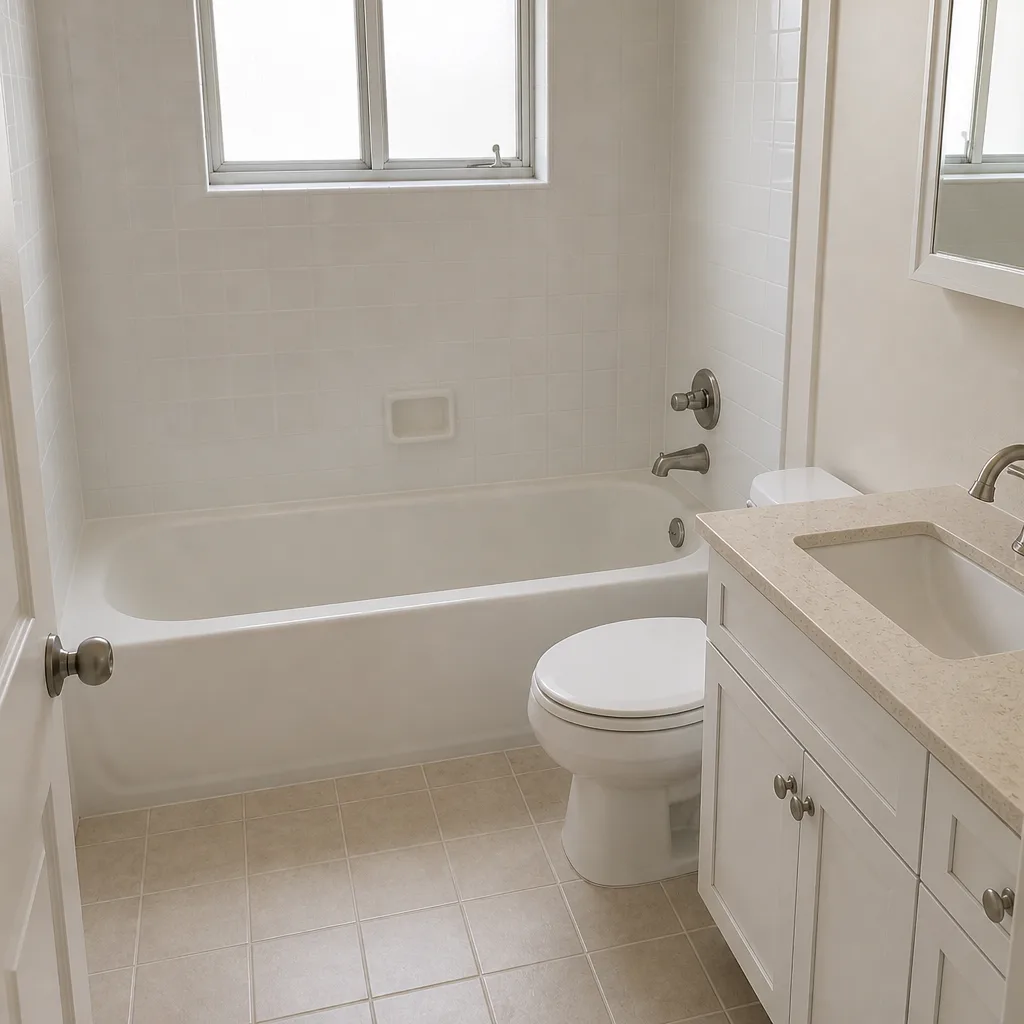
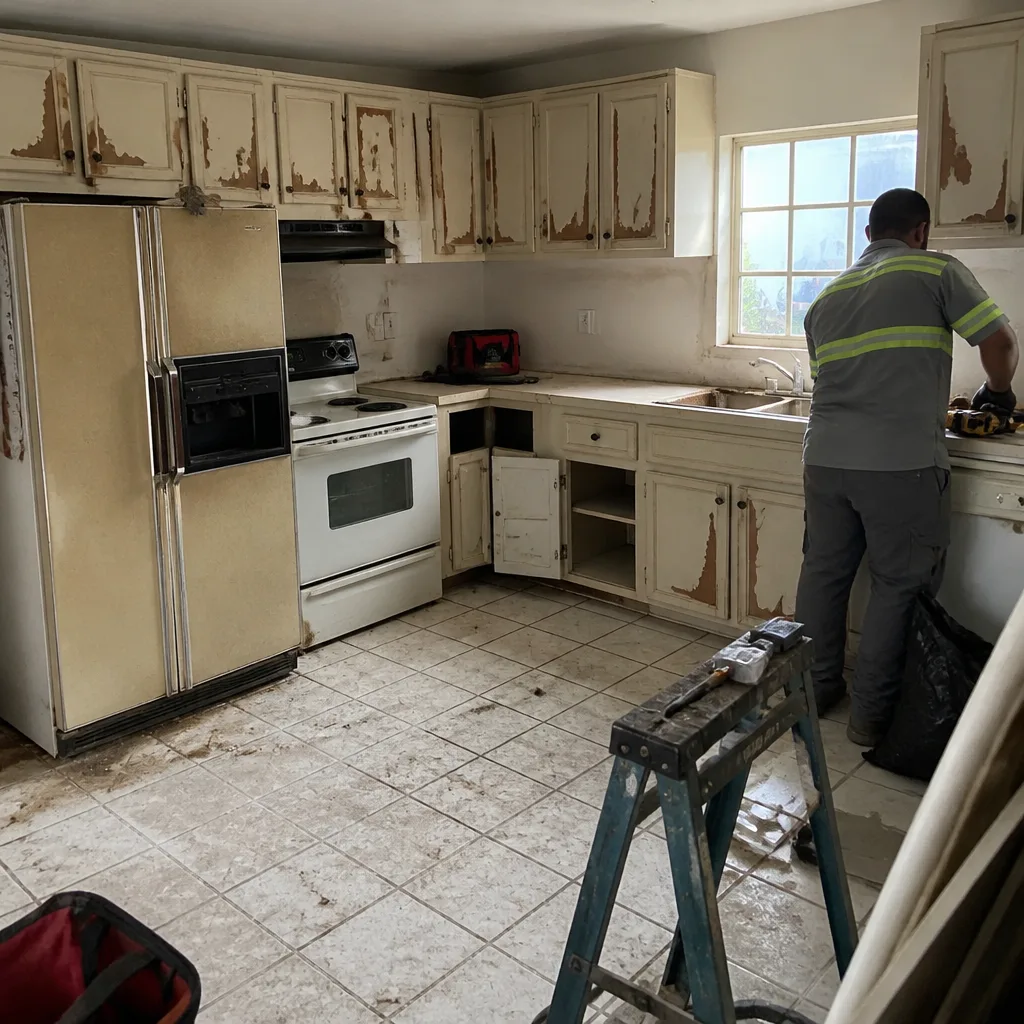
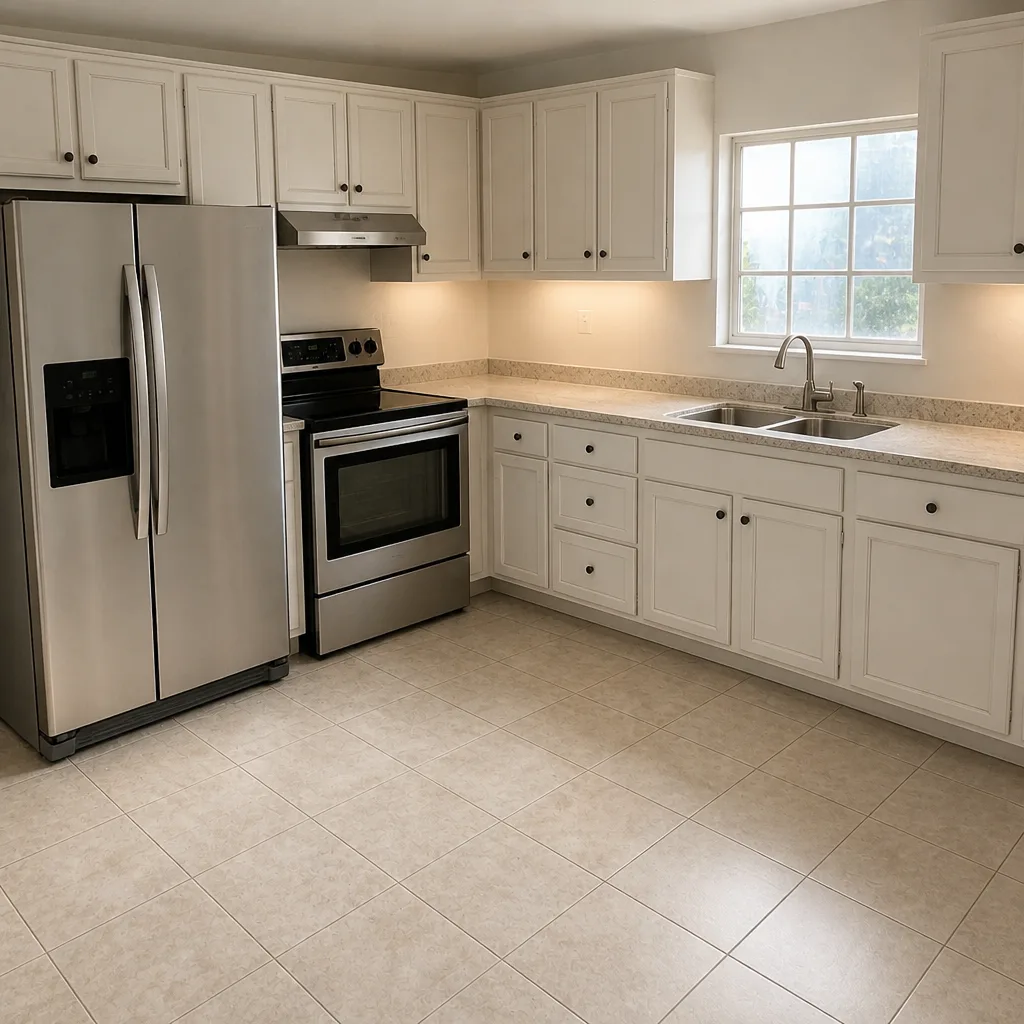
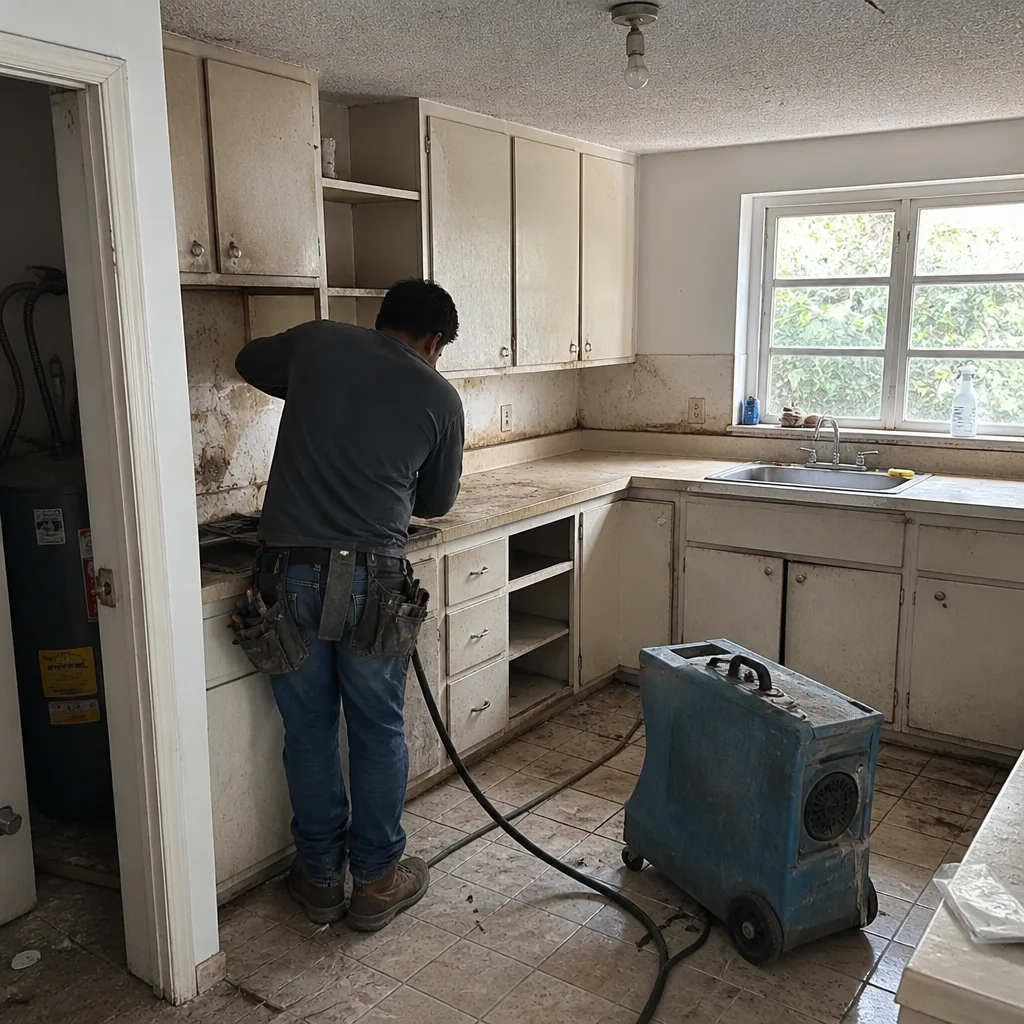
See the difference
 Before
 After
 Before
 After
 Before
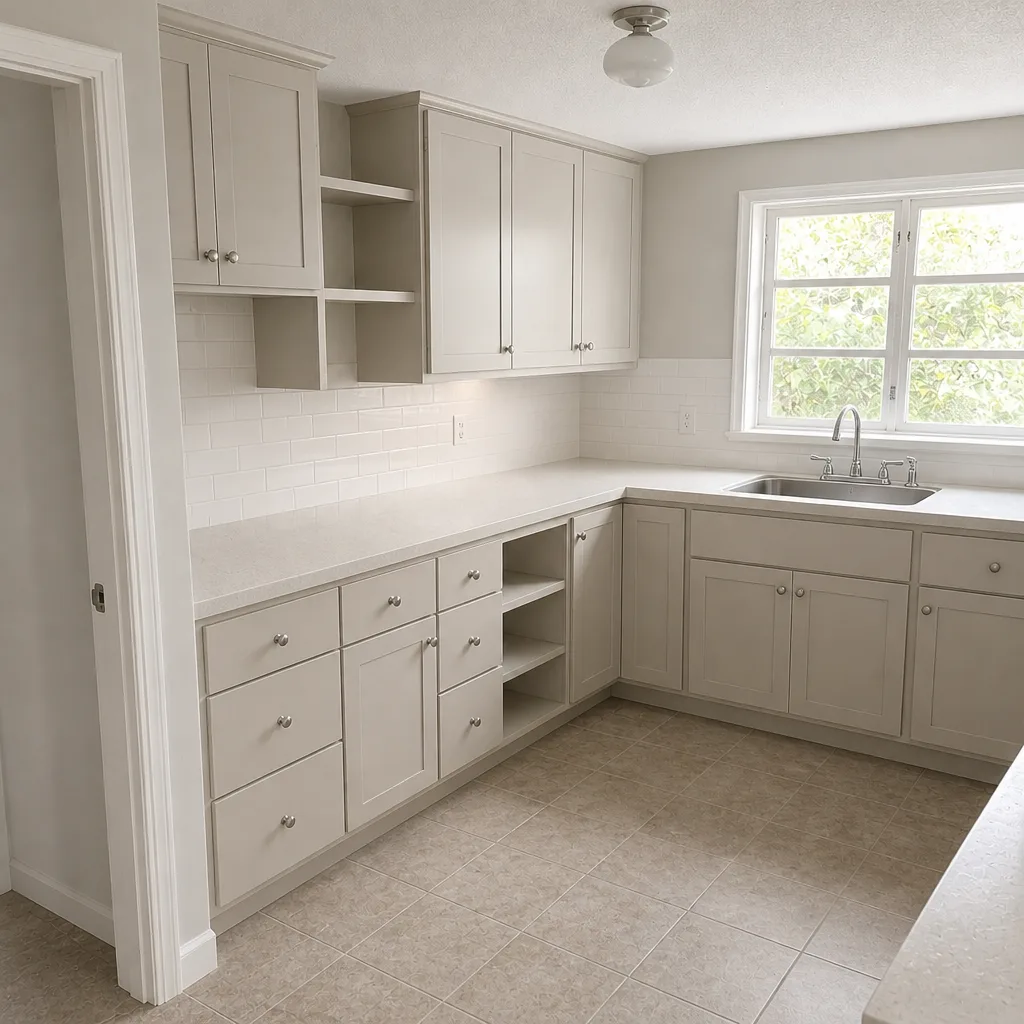 After
Frequently Asked Questions

Yes, a kitchen remodel almost always requires a permit in Miami-Dade County, even when the project is mostly cosmetic. The permit requirement is triggered by the electrical, plumbing, or mechanical work that goes with most remodels – new outlets, moved sink plumbing, venting. Purely cosmetic changes like repainting or swapping cabinet hardware don’t require one. Call (844) 560-5417 for a free estimate and we’ll tell you exactly what your project needs.
Florida’s owner-builder provisions let homeowners pull some permits and do the work themselves on properties they occupy, but the exempt categories are narrow. Painting, cabinet hardware, dry-area backsplash tile, and fixture swaps with identical connections are all safe to do yourself. Electrical work past a fixture swap, plumbing rough-in, gas work, and structural changes all require a licensed contractor by law. The permit category, not your skill level, is what determines it.
It can, and often does, for damage caused by the unpermitted work itself. Most policies exclude damage caused by work that wasn’t permitted or inspected. If a DIY shower pan fails and water damages the subfloor, the adjuster will ask whether the work was permitted – and if it wasn’t, the claim for that damage can be denied. The gap is significant enough that it’s worth factoring into the DIY decision before you start.
In the Kendall market, kitchen remodels typically run $18,000-$55,000 depending on layout, cabinet line, and countertop material. Full bathroom remodels run $12,000-$35,000. Whole-home remodels vary widely with scope. The range reflects materials (a Cambria quartz countertop costs more than laminate) and the extent of the work. Call (844) 560-5417 for an exact written quote on your project – the estimate is free.
Common unpermitted work remediation in Kendall runs $3,000-$15,000, and higher for structural or addition issues. A bathroom tile job that needs an after-the-fact permit and partial tear-out commonly runs $5,000-$10,000. A removed load-bearing wall that needs an engineered beam can run $10,000-$25,000. The actual cost depends on what the inspector finds, which is why unpermitted work is such a liability at sale.
No, not a full bathroom remodel, regardless of experience. A full bath remodel simultaneously crosses into plumbing (moving drains and supply lines), electrical (new circuits, GFCI outlets, vent fans), and wet-area waterproofing (shower pan and tile assembly) – each of which requires a licensed trade and a permit in Miami-Dade. Cosmetic updates like painting, hardware, and re-grouting are within reach. The parts that fail are the parts that touch water and wire.
The Bottom Line
The DIY line in Kendall is a legal line, not a skill line. Painting, cabinet hardware, backsplash tile in dry areas, and simple fixture swaps are genuinely yours to do. Anything touching electrical, plumbing, gas, or structure requires a licensed contractor and a permit in Miami-Dade County – and getting that call wrong can void insurance coverage and cost you at sale. Our advice: if the project has a permit category, hire the pro. If it doesn’t, go slowly, use proper materials for our climate, and take pride in the result. When you’re ready to price the parts that need a license, Bathroom Remodeling in Kendall and our Penhallow Remodeling Kendall home page show how the written-price and 365-Day Done Right Promise work in practice. Call (844) 560-5417 for a free estimate.
Written by the team at Penhallow Remodeling Kendall.