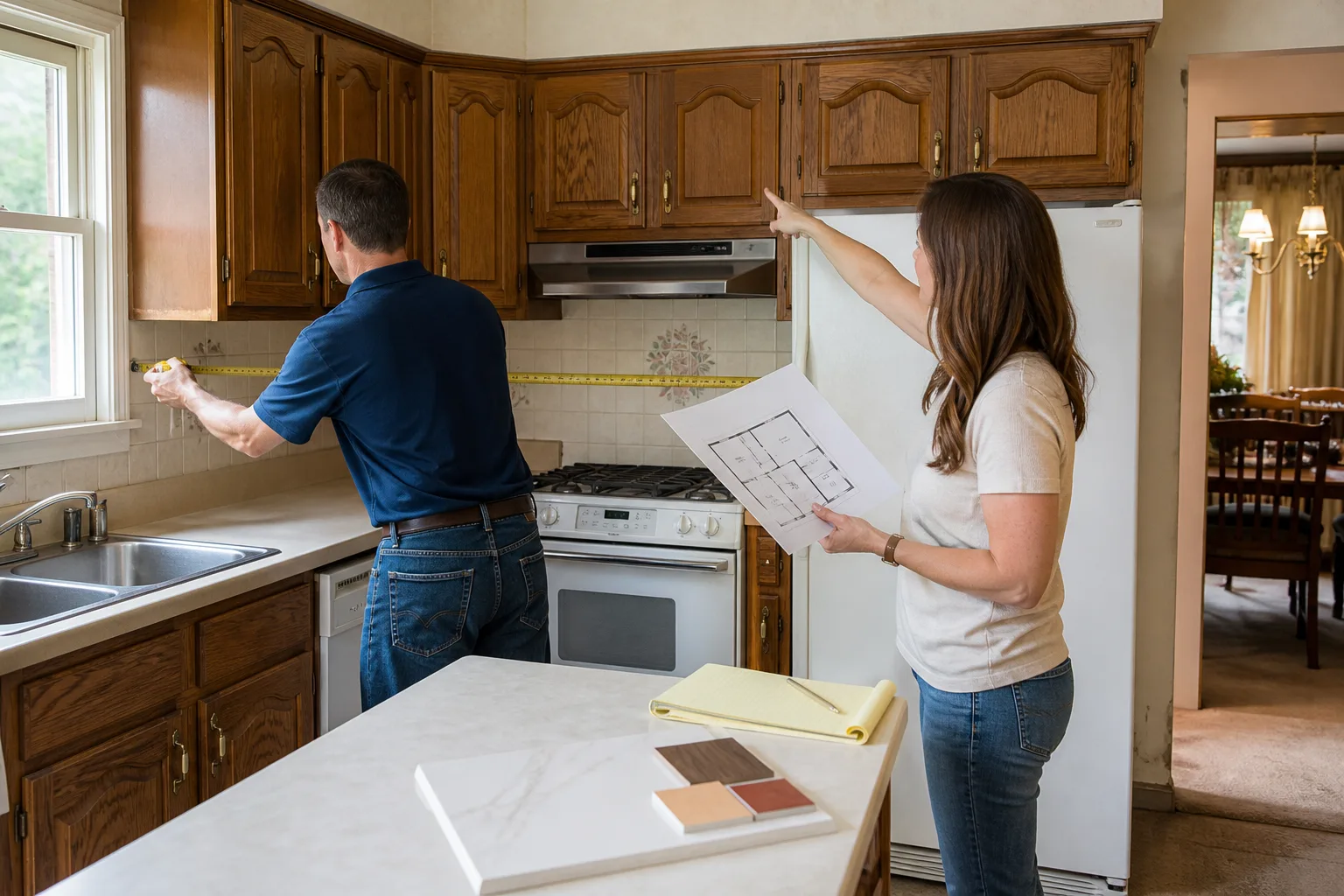
Last updated November 18, 2026








Free written scope consultation - allowances, timeline, and change-order rules on paper before a single trade is scheduled
Construction Warning Signs: A Kendall Homeowner’s Reference Guide
The contractor who shows up on time for the estimate, hands you a professional-looking proposal, and then asks for 50% cash up front before pulling a permit is not a scammer by most people’s definition. He probably holds a valid license. He may have a logo on his truck. And yet the Florida DBPR complaint database is full of exactly that profile – licensed contractors who took deposits, stalled, and left homeowners with half-finished work and no clear path to a refund.
The obvious red flags get plenty of attention. This guide is about the quieter ones: the paperwork trail before a single cabinet is pulled or tile is set. We’ll walk through Florida deposit law, how to read a contract for scope traps, how to confirm a permit is actually in your name, and how to pull the inspection history on your own Kendall home. By the end you’ll know what to check before you sign, and what a good agreement looks like from the other side.
Quick Answer
The subtlest warning signs in construction show up in paperwork, not personality: cash deposits above Florida’s legal limit before a permit is pulled, a scope of work written in vague language that leaves room for change orders, a refusal to put a guarantee in writing, and permits filed in a way that obscures who is accountable. A contractor who passes a license check can still fail every one of these tests. Check the contract, the permit, and the payment schedule before you hand over a dollar.
Styles & brands we work with
- Kitchen remodeling
- Bathroom remodeling
- Home additions & ADU
- Roofing
- Windows & doors
- Driveway & pavers
- Fence
Table of Contents
- What Florida law says about deposits and payment schedules
- The permit-pulling test: confirming a permit is in your name
- Vague scope language that leaves you exposed
- What a refusal to give a written guarantee really signals
- How to read the Miami-Dade inspection record on your home
- Kendall climate and material signals worth watching
- A 7-step paperwork check before you sign
What Florida Law Actually Says About Deposits
Florida has specific rules about how much money a contractor can collect before work starts, and how that money has to be handled. Under Florida Statute 489.126, if a contractor collects more than 10% of the contract price as a deposit, or collects any amount over $5,000 before starting work, that payment must be held in a designated escrow account and applied to the project within 90 days. This is a real legal requirement, not a suggestion.
What does that mean for you in Kendall? If a contractor asks for a 50% cash deposit on a $40,000 kitchen remodel, that’s $20,000 before a permit is pulled and before a cabinet is ordered. Ask where that money is being held. If the answer is “my operating account” or “it’s just how we do it,” you’ve learned what you needed to know.
A legal payment schedule for a kitchen or bathroom remodel usually looks more like this:
| Stage | Typical Share | What It Ties To |
|---|---|---|
| Deposit / contract signing | 10% | Signed contract and permit application |
| Demolition complete | 15 – 25% | Demo passed inspection, materials on site |
| Rough-in complete | 20 – 30% | Plumbing and electrical rough-in inspected |
| Cabinet and countertop install | 20 – 30% | Cabinets delivered and set |
| Final punch list | 10 – 15% | Final inspection passed, punch list walked |
Notice what each draw is tied to: a physical milestone and, usually, an inspection. When a payment schedule is front-loaded and not tied to anything visible, the contractor carries the risk down to you. A written price on day one that matches the invoice at the end is a sign the numbers were real to begin with. If you want to compare what a fair pricing structure looks like for your project, our Kitchen Remodeling in Kendall page lays out real ranges.
The Permit-Pulling Test: Is the Permit Actually in Your Name?
Here’s a warning sign most homeowners miss entirely. The permit for your project should be applied for by the contractor, but the permit record should be tied to your property and generally name you as the owner, with the contractor as the licensed qualifier. That’s the accountable arrangement. What you don’t want is a permit filed under a different address, under a shell company, or not filed at all with the promise that “we’ll pull it after demo.”
Why does it matter? Because if the contractor disappears mid-job, the permit record is what determines whether the work can be legally finished, inspected, and closed out. If the permit was never pulled in a way that ties back to your property, the next contractor you hire inherits an unpermitted mess that has to be corrected, often at your expense.
Use this numbered check before demo starts:
- Ask the contractor for the permit application number before demolition day.
- Look up the permit on Miami-Dade’s online building portal using your property address.
- Confirm the permit lists your property, the correct scope, and the contractor’s license number.
- Ask for a copy of the approved permit posted on-site once issued.
- Do not allow demolition to begin before the permit is issued. This is where many Kendall homes get into trouble.
In our experience in Kendall, projects in older neighborhoods like those around Sunset and Kendall Drive often involve homes built in the 1960s through 1980s. Those decades carry specific building code quirks – older electrical panels, non-permitted additions from previous owners – and pulling a clean permit is where they surface. Our General Contractor in Kendall page walks through how we handle that in older housing stock.
Vague Scope Language That Leaves You Exposed
The written contract is where disputes are won and lost. Licensed contractors who operate poorly don’t write contracts that say “we will do whatever we want” – they write contracts that sound complete but leave broad exceptions. Here are the specific phrases that protect the contractor and expose you, and what to ask for instead.
- “Standard installation” – Ask what standard means in square footage, in linear feet of cabinet, in number of outlets. Any word that sounds like a category should be quantified.
- “As required by code” – Fine in principle, but ask: which code, what version, and who pays if the code requires upgrades your current home doesn’t meet. In Kendall, this frequently comes up with impact-rated windows and doors.
- “Allowance included for tile” – Ask the dollar amount and the square footage. A $1,500 tile allowance on a 60-square-foot bathroom sounds fine until you pick a $20/sq ft material.
- “Owner to provide” – Spell out exactly what you’re supplying and by when. If the schedule stalls waiting on your materials, that’s often tied to a change order or delay charge.
- “Labor only” – Sounds cheaper. It means you’re sourcing and accepting delivery of cabinets, countertops and fixtures, and you carry the risk if something shows up damaged.
- “Additional work billed at hourly rate” – Name the rate. Name the hourly cap. Name who decides if additional work is needed.
A written price that lists scope line by line – square footage, brand and line of cabinet, square footage of tile, count of outlets – is the standard. Something like a KraftMaid or Wellborn cabinet line is a specific product you can look up. “Cabinetry” is not.
What a Refusal to Give a Written Guarantee Signals
Ask a contractor what happens if a tile cracks six months after install, or a shower pan leaks. A good answer starts with a document. A poor answer starts with “we stand behind our work.” That phrase has no expiration, no scope, and no remedy. It’s not a guarantee – it’s a sentiment.
A written guarantee has four moving parts, and all four should appear in writing before work begins:
- What’s covered: labor, materials, or both. Be specific about which.
- How long: a stated period, not “as long as it’s reasonable.”
- What happens if it fails: the remedy – return visit, repair, replace, refund.
- How you contact them: a real phone number, ideally answered by a real person.
When a contractor cannot produce a written guarantee, it tells you something practical: callbacks are probably handled case by case, often by whoever answers the phone that day, and only when they’re not tied up on a paying job. The homeowner who can’t get a callback in month three is the one who ends up posting a review. Every project we run under The Kingswell Way carries the 365-Day Done Right Promise in writing – if work fails inside the guarantee period, we come back and fix it at no charge. That is what a document looks like, and it’s what you should ask any contractor to show you.
Reading the Miami-Dade Inspection Record on Your Home
Before you hire anyone, pull the inspection history on your own property. You can do this without special access – Miami-Dade County has an online permits and inspections portal. Search by address and you’ll see every permit pulled on the property, whether it was inspected, and whether it was closed out.
What to look for:
- Open permits. A permit that was pulled but never closed out is a live liability. It may have expired, it may have failed inspection, or it may never have been finished. Ask for the sequence before you buy or remodel.
- Missing inspections. A permit that shows only the application fee and no inspections usually means work proceeded without oversight. That’s a risk on any renovation stage – especially rough-in plumbing and electrical.
- Permitted additions that don’t match records. If your home has a converted garage or an enclosed lanai with no permit record in Kendall, the next remodel has to address it. A good contractor will flag it before pricing, not after.
If the record is clean, the history supports your project estimate. If it’s not, expect the next contractor to include a line for addressing prior work. Either way, you’re better informed than the homeowner who bought the house without ever looking.
Kendall Climate and Material Signals Worth Watching
South Florida construction has its own warning signs that have nothing to do with paperwork. Materials and methods have to survive salt air, intense UV, and one of the wettest summers in the country. A contractor who prices a project in Kendall without addressing these realities is telling you something about how they think.
Watch for these:
- No mention of impact-rated windows. Miami-Dade has strict wind-borne debris requirements. If the windows on your proposal are described generically, ask for the specific product – CGI, CWS, ES Windows, and ECO Window Systems all publish their Miami-Dade approval numbers, and so should your proposal.
- Cement board specified for exterior tile or shower backer. In a climate with year-round humidity, a cement board substrate (the moisture-resistant layer behind tile) is not optional. If the proposal just says “backer board,” confirm the product.
- No vapor barrier discussion for walls that touch exterior siding. James Hardie siding on a Kendall home demands specific weather-resistive barrier details. A good contractor names the product and the sequence.
- Countertops without a humidity plan. Quartz is stable, but any natural stone or laminate needs an honest discussion about how it reacts to a humid bathroom. Cambria, Silestone and Caesarstone all carry their own warranties, which layer under a contractor’s labor guarantee.
Our Bathroom Remodeling in Kendall page walks through the material choices we steer homeowners toward for these reasons.
A 7-Step Paperwork Check Before You Sign
If you remember nothing else from this guide, work through this list before signing anything. It takes an hour and it has saved Kendall homeowners tens of thousands of dollars.
- Verify the license. Look up the contractor’s license number on the Florida DBPR site. Confirm the name matches the person signing the contract and confirm the license is current, not suspended.
- Read the scope line by line. Every material, brand, square footage, and count should appear. If a line is vague, ask for it in writing before you sign.
- Ask for the payment schedule and tie it to milestones. Deposits should follow the Florida limits – no more than 10%, or escrowed if higher.
- Confirm the permit application timeline. Ask when the permit will be pulled and confirm nothing gets demolished before the permit is issued.
- Get a written guarantee and read it. What’s covered, how long, and what happens if work fails. If it’s verbal, it’s not a guarantee.
- Get the change order policy in writing. How much does a change order cost? Who approves it? Is there a cap on the change-order markup?
- Confirm the phone number works and who answers. Call the office. See if a real person answers. If it goes to voicemail at every hour, expect the same during your project.
Compare that experience to a written price before any work starts, a defined arrival window, and a real person on the phone – the standard our Penhallow Remodeling Kendall home page takes you through in detail.
Common Mistakes to Avoid
- Paying a cash deposit before the permit is issued. The two should be linked. If a contractor wants money before pulling the permit, ask why. In Kendall, older homes often need additional inspection before the permit is approvable – the honest answer is to pull the permit, not to collect the money first.
- Accepting a proposal that only lists materials by category. “Cabinets,” “tile,” “countertops” without a brand name or line means the contractor picks – usually the cheapest. KraftMaid, Wellborn, Cambria, Silestone, and Caesarstone all have specific product lines you can price-check.
- Believing a verbal guarantee covers anything. A guarantee you can’t read, hold and file is not a guarantee. It ends when the invoice clears.
- Skipping the inspection record search. If your home in Kendall had a lanai enclosed or a garage converted without a permit from a prior owner, you may be buying the cost of correcting it when you remodel. Pull the record before you sign the estimate.
- Letting the contract hide the punch list. A last-page note saying “final payment due upon substantial completion” without defining substantial is an exit door for the contractor and a lock-in for you. Insist on a written punch list and final inspection as the last payment trigger.
- Rushing the timeline. Every really good contractor will tell you a realistic schedule and a reason it’s realistic. A contractor who promises 8 weeks on a full kitchen and bath remodel without a plan review is telling you the schedule is aspirational, not committed.
- Not calling the number twice. Call the office once during business hours and once after. If a real person answers both times, that’s a real signal. If you can’t reach anyone before the contract is signed, you won’t reach them after.
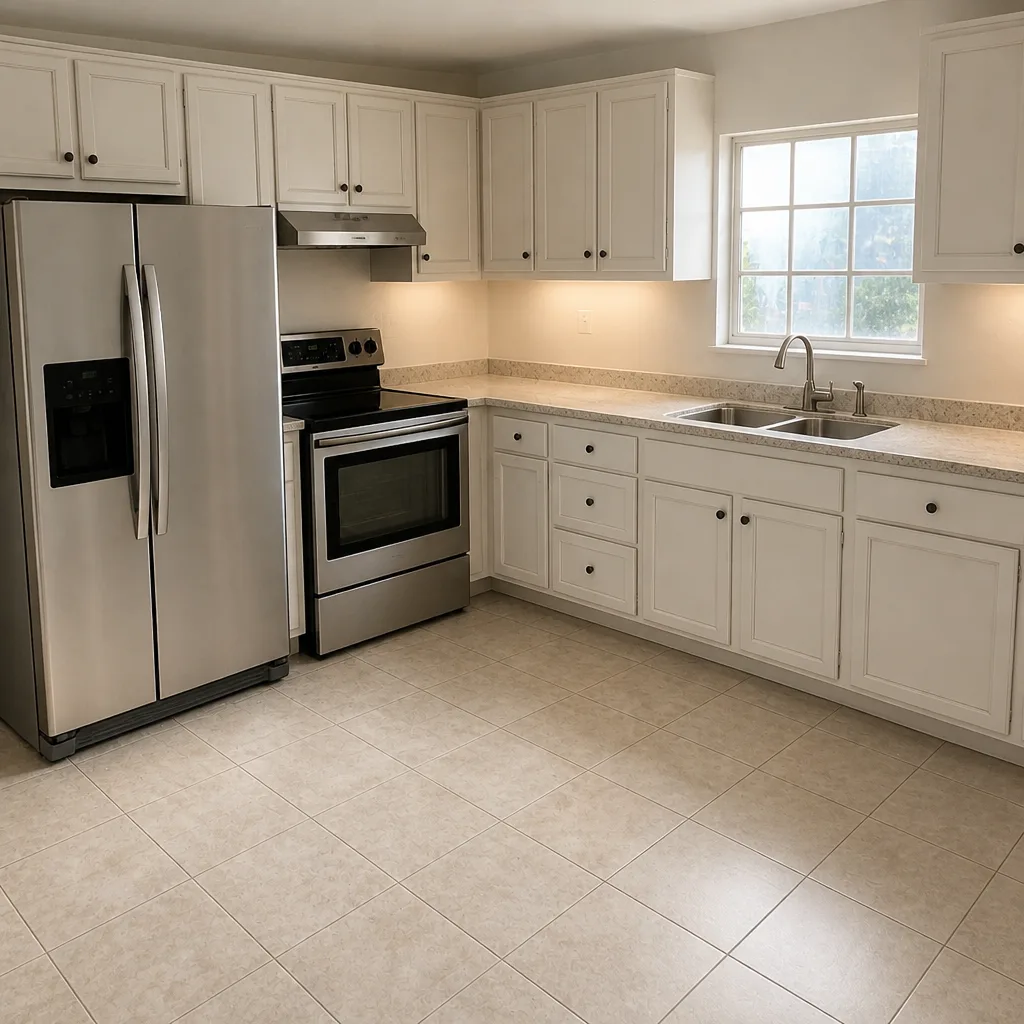
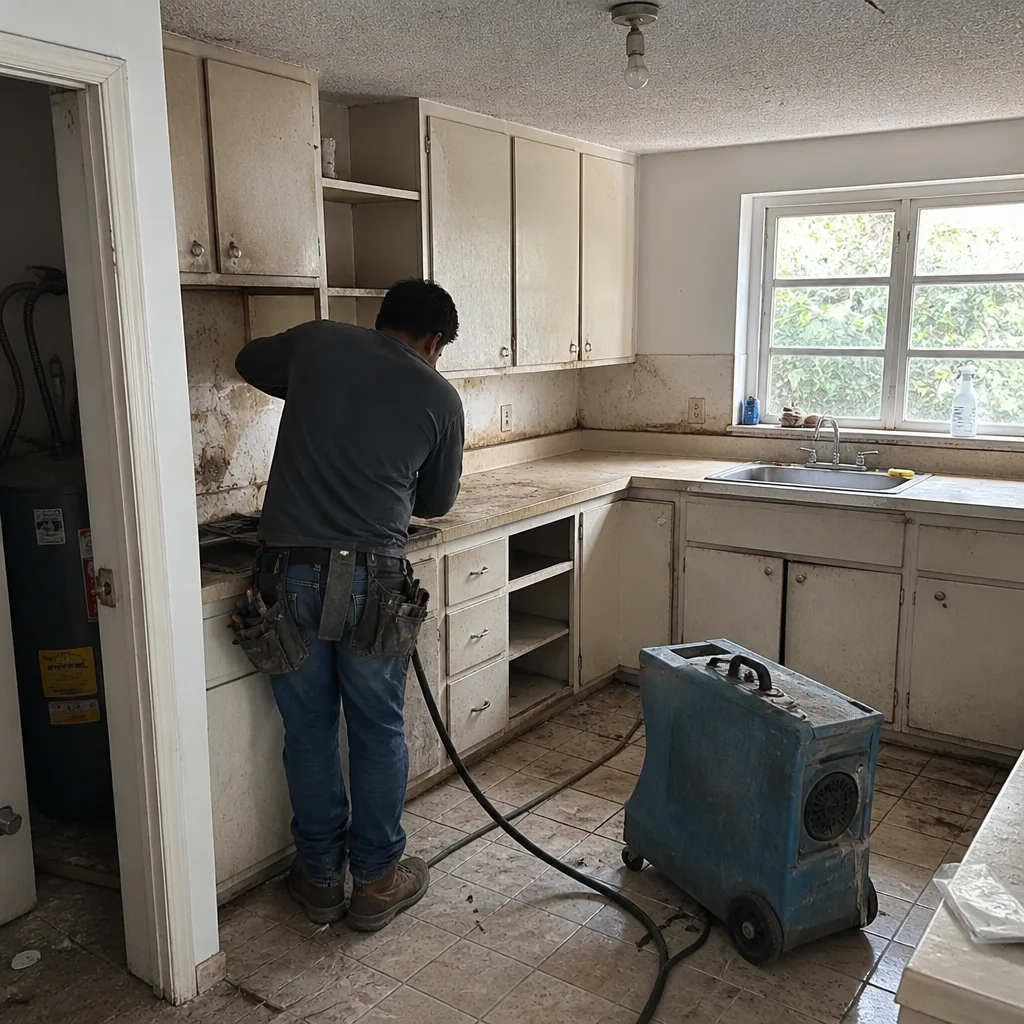
See the difference
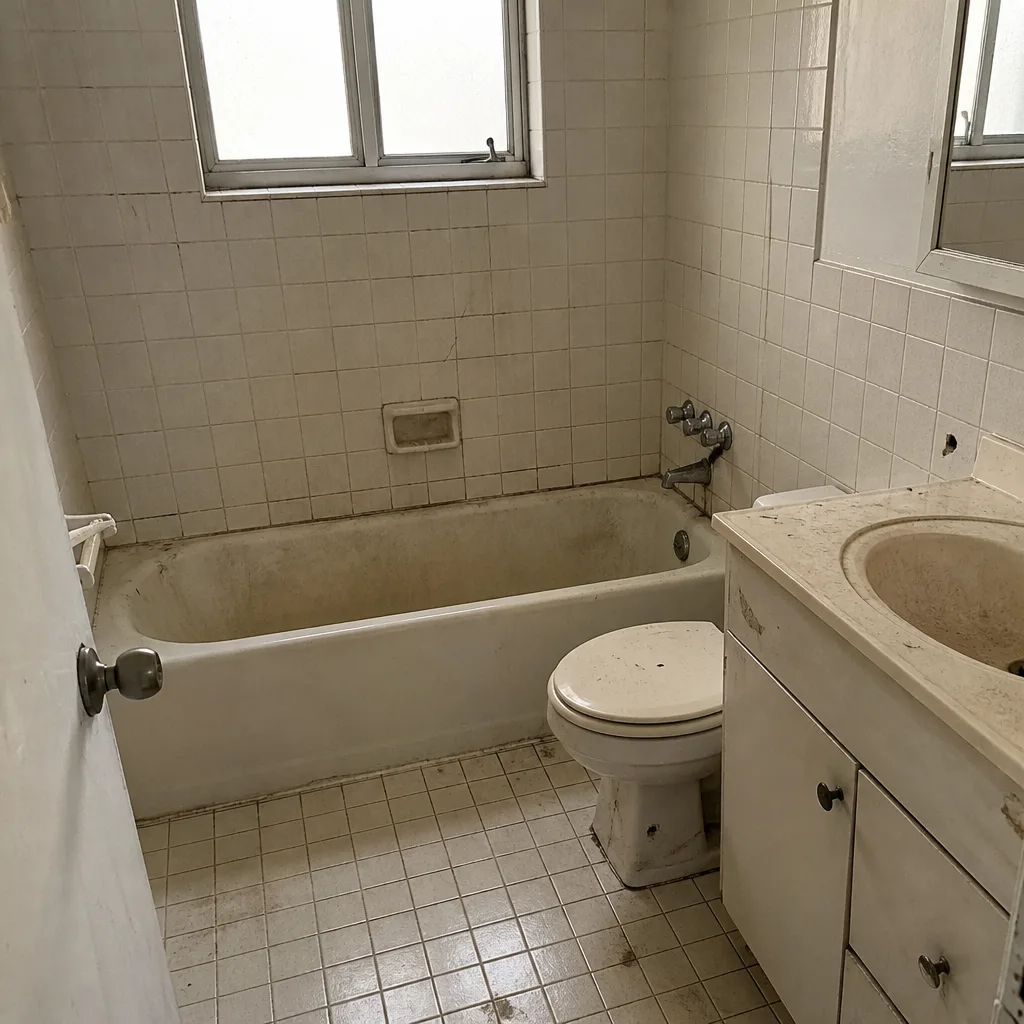 Before
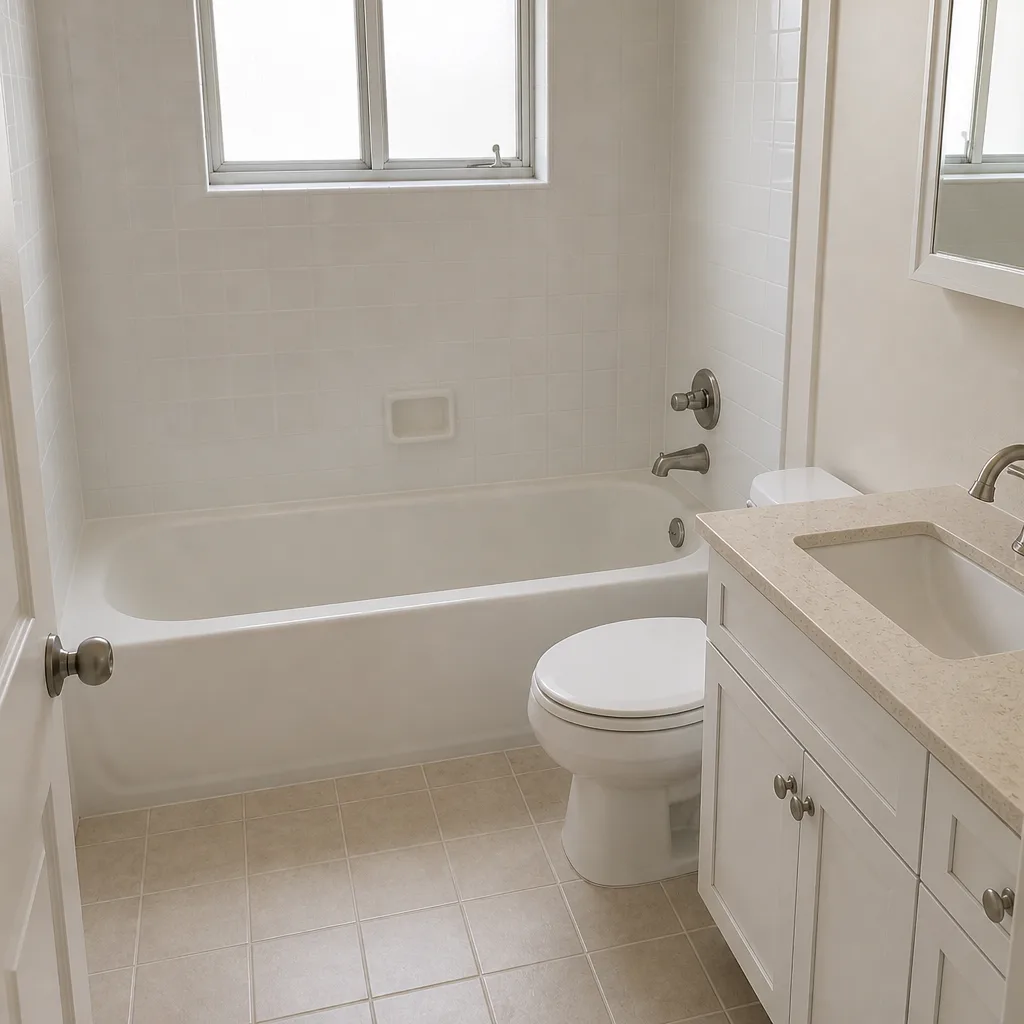 After
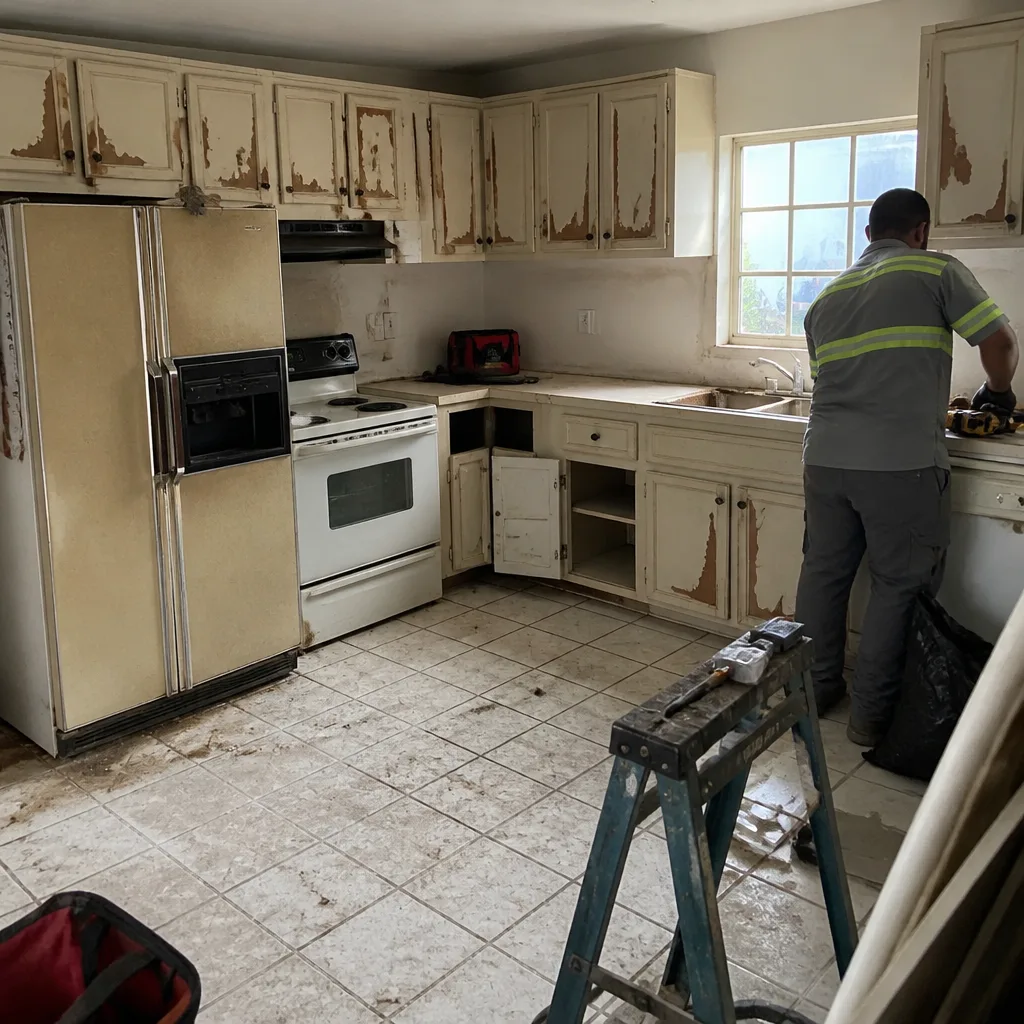 Before
 After
 Before
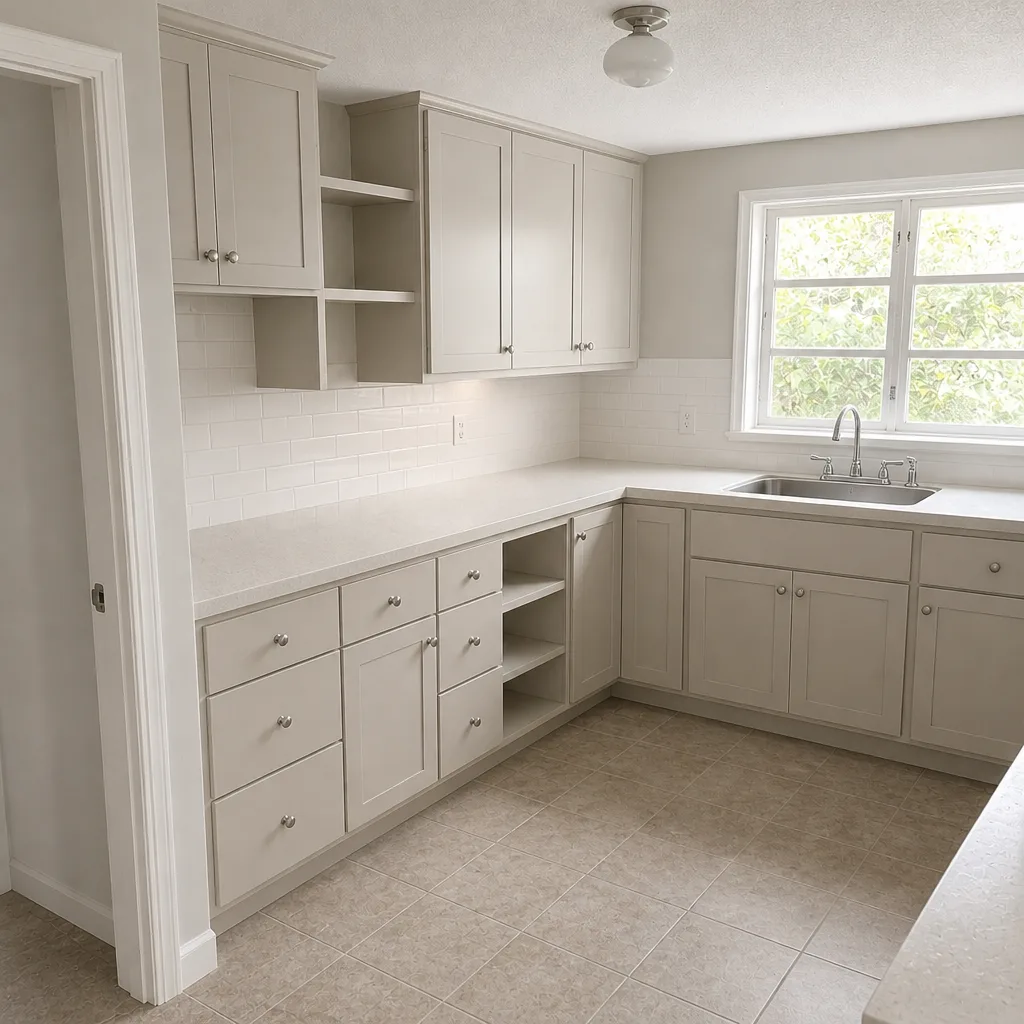 After
When to Call a Professional
Some of these checks you can run yourself in an hour. Others – reading a scope, spotting an under-specified substrate or a vague impact-window line – need a trained eye. If you’re staring at a proposal and something feels off but you can’t name it, that’s the moment to bring in a second set of eyes. So is any project where a permit wasn’t pulled on a prior remodel, where an inspection was never closed out, or where you’re trying to estimate the real cost of addressing a prior owner’s work. A free second opinion before signing is always cheaper than a change order after demo.
Penhallow Remodeling Kendall offers free estimates in Kendall – call (844) 560-5417. Every estimate is a written price you can hold us to, every project carries a written guarantee, and a real person answers the phone any hour.
Frequently Asked Questions

The biggest red flag is a large cash deposit requested before the permit is pulled. Florida law limits deposit amounts for licensed contractors, and a payment schedule that isn’t tied to physical milestones is where Kendall homeowners most often get burned. Ask for the permit application number and the payment schedule in writing before signing anything.
Around 10% of the contract price is the standard deposit in Florida, and anything above that – or any amount over $5,000 before work starts – should be held in a designated escrow account under Florida Statute 489.126. If you’re quoted 30% or 50% with no escrow arrangement, ask questions and consider walking. Call (844) 560-5417 for a free estimate written to that standard.
Search the Miami-Dade County online building portal using your property address. You’ll see every permit pulled on the address, the inspection dates, and whether each permit was closed out. An open or expired permit is a live liability, and a project without inspection history tells you the prior work is unverified.
A written guarantee should name what’s covered (labor, materials, or both), how long it lasts, what happens if work fails, and how to reach the contractor. A verbal “we stand behind our work” doesn’t count. Our 365-Day Done Right Promise is delivered in writing on every project, and we return for a free visit if a repair fails.
Because a written scope is where the project’s real cost is decided. Phrases like “standard installation,” “as required by code,” and “tile allowance” sound complete but leave the contractor protected and the homeowner exposed when a dispute arises. Every material, brand, and square footage should appear on the contract, and every change order policy should be in writing.
Yes. We pull the permit in the proper name, tie it to your property, and confirm nothing is demolished before the permit is issued. Every technician is background-checked and arrives in uniform, so you know exactly who is walking into your home. Two layers – a written price on day one and a written guarantee at close – are what back that up. Call (844) 560-5417 to schedule your free estimate.
The Bottom Line
The contractors who leave homeowners in trouble usually aren’t identifiable by their logo or their pitch. They’re identifiable in the paperwork: a cash deposit above Florida limits, no permit pulled before demolition, a scope written to sound complete, and a guarantee that only exists verbally. Those are the things to check before you sign – not the personality of the person across the table. A written price that holds on day one and a written guarantee that holds on day 400 are the two documents that make everything else negotiable. Start with those. Call (844) 560-5417 if you want them in a Kendall estimate.
Written by the team at Penhallow Remodeling Kendall.