
Last updated November 18, 2026



Free written scope consultation - allowances, timeline, and change-order rules on paper before a single trade is scheduled
Bathroom Remodeling Warning Signs Every Homeowner Should Know
The shower pan that failed two years after installation wasn’t a tile problem. It was a written-scope problem: the original contract never specified a waterproofing membrane, so none went in. The homeowner never knew to ask, and nobody in the chain was obligated to mention it. That story repeats in Kendall more often than most people realize, and the tell almost always shows up before demolition day, not after. This guide walks through the warning signs buried in quotes, contracts, and pre-job conversations that predict whether a bathroom remodel goes sideways, plus the construction-stage signals worth catching before tile goes up.
Quick Answer
The biggest bathroom remodeling warning signs are not visible in tile or fixtures. They live in the paperwork and the pre-job conversation: a quote with no written scope of waterproofing, fixture allowances so vague they balloon mid-job, a contractor who can’t name the membrane or method they’ll use, and no written guarantee with defined terms. Catch those four things before signing and you’ve eliminated most of the risk a bathroom project carries.
Styles & brands we work with
- Kitchen remodeling
- Bathroom remodeling
- Home additions & ADU
- Roofing
- Windows & doors
- Driveway & pavers
- Fence
Table of Contents
- Pre-Job Red Flags in Quotes and Contracts
- Why Vague Fixture Allowances Balloon Your Budget
- The Contractor Who Can’t Name the Waterproofing Product
- During-Construction Signals Worth Watching
- Miami-Dade Moisture Risks and Exhaust Ventilation
- How a 365-Day Written Guarantee Changes the Equation
- A Pre-Signing Walkthrough Checklist
Pre-Job Red Flags in Quotes and Contracts
A bathroom quote is a document, not a conversation. When the number lives only in an email or a text, the scope behind it lives only in someone’s head, and that is where a Kendall remodel starts to drift. The pre-job paper trail tells you almost everything about how the job will run.
Here is what a warning-sign quote tends to look like:
- One line for “bathroom remodel” with a lump-sum number and nothing under it. A real quote itemizes demolition, framing repair allowance, rough plumbing, rough electrical, substrate, waterproofing, tile setting, fixture install, and finish. If the line items aren’t there, the scope isn’t either.
- No written waterproofing scope. The single most consequential missing line in a bathroom quote. Wet-area waterproofing should be named, with the product and method, not folded into “tile work.”
- Allowances with no dollar figure. “Homeowner to select fixtures” without a stated allowance means the price is not real yet.
- No permit listed. In Kendall and across Miami-Dade, a full bathroom remodel with plumbing or electrical changes requires permits. A quote that quietly omits permit costs is either skipping the permit or planning to surprise you with it.
- No written guarantee. A verbal “we stand behind our work” is not a guarantee. It is a sentence.
We’ve seen homeowners in Kendall sign quotes that fit on a sticky note. Almost every one of those projects developed a change order within the first week of demolition, because the scope that wasn’t written became the scope that got renegotiated. A General Contractor in Kendall worth hiring will hand you a written price with the scope spelled out before work starts, and will expect you to read it.
Why Vague Fixture Allowances Balloon Your Budget
An allowance is a placeholder dollar amount in a contract for something you haven’t picked yet. Fixture allowances are the number-one source of mid-job price surprises in bathroom remodels, because the number in the contract and the number on the showroom tag are rarely the same figure.
Say a quote carries a $400 allowance for a vanity faucet. You walk into a showroom and pick a Kohler or Moen model that runs $650. You now owe $250 plus whatever markup the contractor applies, and you’ve just learned about it after demo. Multiply that across a shower valve, a toilet, a vanity, lighting, and a mirror, and a “surprise” of $1,500 to $3,000 is entirely normal. It isn’t even dishonest. It’s just vague.
Warning signs to watch for:
- The allowance line has no dollar figure attached.
- The allowance is set unrealistically low for the finish level shown in photos the contractor shared.
- The quote doesn’t say who buys the fixtures, who takes delivery, or who eats the freight and restocking fees if a piece arrives damaged.
- There’s no stated process for approving overages in writing before the order goes out.
Ask for a fixture schedule locked to your actual selections before signing, or an allowance set to the brands you actually intend to install. Cambria, Silestone, and Caesarstone countertop upgrades, Kohler and Moen fixtures, and KraftMaid or Wellborn cabinetry all have well-known price bands. A contractor operating to a written-price standard will pin those down with you in advance, not discover them at the showroom register. For the broader picture on how finishes drive the total, our Bathroom Remodeling in Kendall page breaks the cost bands down by scope.
The Contractor Who Can’t Name the Waterproofing Product
Ask a contractor one question before you sign: “What waterproofing product and method will you use in the shower, and what substrate goes behind it?” If the answer is vague, rambling, or “we always do it right,” that is not a minor concern. It is a warning sign that the single component most likely to fail is not being managed with any specificity.
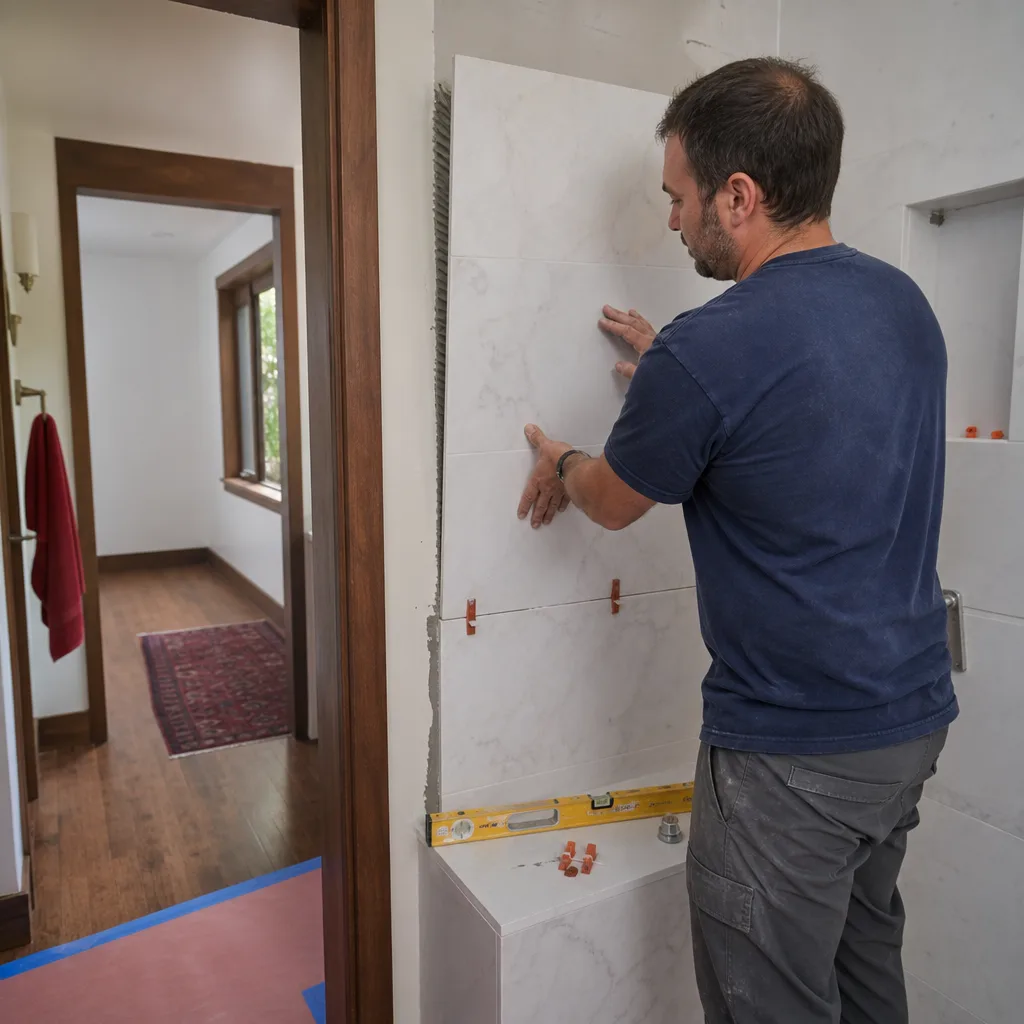
Professional shower waterproofing has a limited number of legitimate methods: a liquid-applied membrane, a sheet membrane, or a bonded fabric membrane over a proper cement board substrate (the moisture-resistant layer behind your tile). Each has a named product and a manufacturer’s installation spec. A contractor who can rattle off the product and the substrate is a contractor who has read the spec. One who can’t probably hasn’t.
Why it matters physically: water is patient. It finds the seam you didn’t seal and travels into the framing, the subfloor, and the wall cavity behind the shower. By the time you see the tell-tale dark grout, soft drywall at the baseboard, or a bubble of paint peeling on the adjacent wall, the damage is already in the structure. The repair is not tile. The repair is demolition, framing, and a full redo.
- Ask for the membrane product name and the method (liquid-applied, sheet, or fabric).
- Ask what substrate the membrane goes over.
- Ask whether the waterproofing stage gets photographed.
- Ask whether the waterproofing inspection happens before or after tile.
- Ask what happens if the membrane fails inside the guarantee period.
Any contractor who flinches at questions three and four is telling you something. Photographs at the waterproofing stage, taken before tile, are how a homeowner sees what’s behind the wall without ever picking up a tool. And it’s why we install the materials we do and name them in the paperwork. When you install Cambria quartz, the countertop carries its own lifetime warranty alongside ours. Waterproofing works the same way: the product’s spec and the installer’s guarantee are two layers, and you want both in writing.
During-Construction Signals Worth Watching
Some warning signs only appear once the job is underway. You don’t need to supervise a crew, but a handful of signals are worth watching because they’re logistically verifiable without technical knowledge.
- Tile going up too soon after waterproofing. Liquid-applied membranes need cure time before tile. If tile is set the same day the membrane went on, someone is skipping a step.
- No photos at framing or waterproofing stages. A contractor managing the job professionally takes them by habit. If you have to ask, ask before the wall closes.
- Cement board installed without a moisture barrier behind it, or drywall in a wet zone. Either one is a redo waiting to happen.
- The exhaust fan installed at final-finish instead of planned in framing. Often a sign the ventilation spec was never set, which we’ll get into next.
- The job site noticeably dirty day after day. Cleanliness is a discipline, and a crew that can’t keep a job site orderly usually isn’t managing the substrate work closely either.
While framing is open, this is also the moment to verify what’s inside the wall: plumbing rough-in, shutoff valves, blocking for grab bars if you’ll want them later. In Kendall, we regularly see remodels where the original 1980s shower valve was never replaced because it wasn’t in the scope, and it fails within a year of the remodel. Write the rough plumbing into the scope, and confirm the valves are replaced during framing, not left as a “we’ll get to it” line item.
Miami-Dade Moisture Risks and Exhaust Ventilation
Kendall sits in one of the most humid climates in the country, and the bathroom is the room where that humidity does its worst work. A bathroom exhaust fan that moves 50 CFM (cubic feet per minute) may be fine in a dry climate, but in South Florida it’s often undersized for the room’s volume, the family size, and the shower duration.
Undersized ventilation produces a predictable sequence in Kendall homes: condensation on mirrors that never quite clears, mold appearing at grout lines and the ceiling corners within 18 to 36 months, paint peeling near the shower, and eventually rotted framing. None of that is a tile problem. It’s a ventilation spec problem, and it’s set at design, not at close-out.
Here’s how to verify the spec before close-out:
- Ask the contractor what cubic-feet-per-minute rating the fan is spec’d for and why.
- Ask whether the fan vents to the exterior or into the attic (into the attic is a mistake; it moves moisture into the structure).
- Ask whether the fan is on a humidistat or timer instead of a simple on/off switch, so it runs long enough to clear moisture after a shower.
- Confirm the fan and its ductwork are covered in the written scope, along with the exterior vent hood.
Kendall’s summer humidity runs high enough that a contractor who treats ventilation as an afterthought is a genuine warning sign. It’s also cheap to get wrong and expensive to fix later, since retrofitting a properly sized vent often means opening a ceiling. Write it in, spec it, and verify it before the drywall goes up.
How a 365-Day Written Guarantee Changes the Equation
A guarantee without written terms is a marketing slogan. Read any guarantee the same way you’d read the contract’s scope: what’s covered, for how long, what happens if the work fails, and who pays for the return visit. The answers change your risk profile enormously.
The 365-Day Done Right Promise we operate under works like this: if the work fails inside the guarantee period, we come back and fix it at no charge. That’s covered in writing on every project. The return visit is free: no service call fee, no re-inspection charge. On a bathroom, that means the two highest-risk failure points, waterproofing and plumbing rough-in, both carry a written consequence if something goes wrong within the year, and the contract says exactly what that consequence is.
Warning signs in a guarantee:
- No written terms. “We guarantee our work” with no document is not enforceable.
- Vague duration. “Lifetime” with no defined start or end, or two months of coverage described as a warranty.
- Carve-outs that swallow the coverage. If waterproofing, substrate, and plumbing are each excluded, the guarantee covers paint and grout and nothing else.
- Return visit billed as a service call. If the “guarantee” charges you a fee to come back and inspect the failure, you are the guarantee’s customer, not its beneficiary.
For a broader view of how written-pricing guarantees fit across a whole project, the Penhallow Remodeling Kendall home page explains the standard we hold to. The short version: a written price before work starts, a defined arrival window, a clean job site, and a written guarantee on every project.
A Pre-Signing Walkthrough Checklist
Before you sign a bathroom remodel contract in Kendall, walk through these items in order. Give each one five minutes. The exercise takes under an hour and catches nearly every failure mode this guide has covered.
- Read the scope line by line. Every line representing work should have a dollar figure and a description. If “miscellaneous” appears, ask what’s inside it.
- Find the waterproofing line. If it’s not there, stop and ask for it in writing, with the product and method named.
- Find the substrate line. It should say cement board or another approved moisture-resistant substrate, not “backer.”
- Find the fixture schedule. Every fixture should be listed with a make and a dollar allowance, or a locked selection.
- Verify permits. The contract should state that permits are pulled and inspections passed, and whether permit fees are included.
- Verify the exhaust ventilation spec. CFM rating, venting location, control type, and ductwork all in writing.
- Read the guarantee paragraph word for word. Duration, coverage, and the process for a return visit. If it’s not in the contract, ask for it in writing.
- Ask who will be on your job site. Background-checked, uniformed technicians are a standard, not a perk, and you should be told so explicitly.
Any contractor who bristles at this list is telling you something useful before you’ve spent a dollar. A contractor operating to a real standard will walk through it with you and hand you a written answer to each. That’s the difference between a quote and a contract.
Common Mistakes to Avoid
- Accepting a verbal ballpark because it’s lower than the others. A verbal number changes at the door. Get every bid in writing with itemized scope and compare like for like; the cheapest verbal bid is usually the most expensive project.
- Skipping the waterproofing question because the tile looks fine. The failure is behind the wall and invisible until the damage is structural. Ask before signing, not after the first sign of dark grout.
- Leaving fixture allowances blank in Kendall contracts. South Florida showrooms make a three-figure allowance easy to exceed. Lock the schedule or the number in advance.
- Treating the exhaust fan as a finish item. In Miami-Dade’s humidity, ventilation is a structural decision. Verify the spec during design, not close-out.
- Assuming a permit isn’t needed for a “small” bathroom job. Any plumbing or electrical relocation in a Kendall bathroom needs permitting. Ask, and get the answer in writing.
- Never asking about the guarantee terms. A guarantee without written duration, coverage, and a return-visit process is a sentence, not a promise. Read it before you sign.
- Choosing a contractor based on the render, not the paperwork. Design software is cheap. Written scope, real substrate standards, and a written guarantee are not.
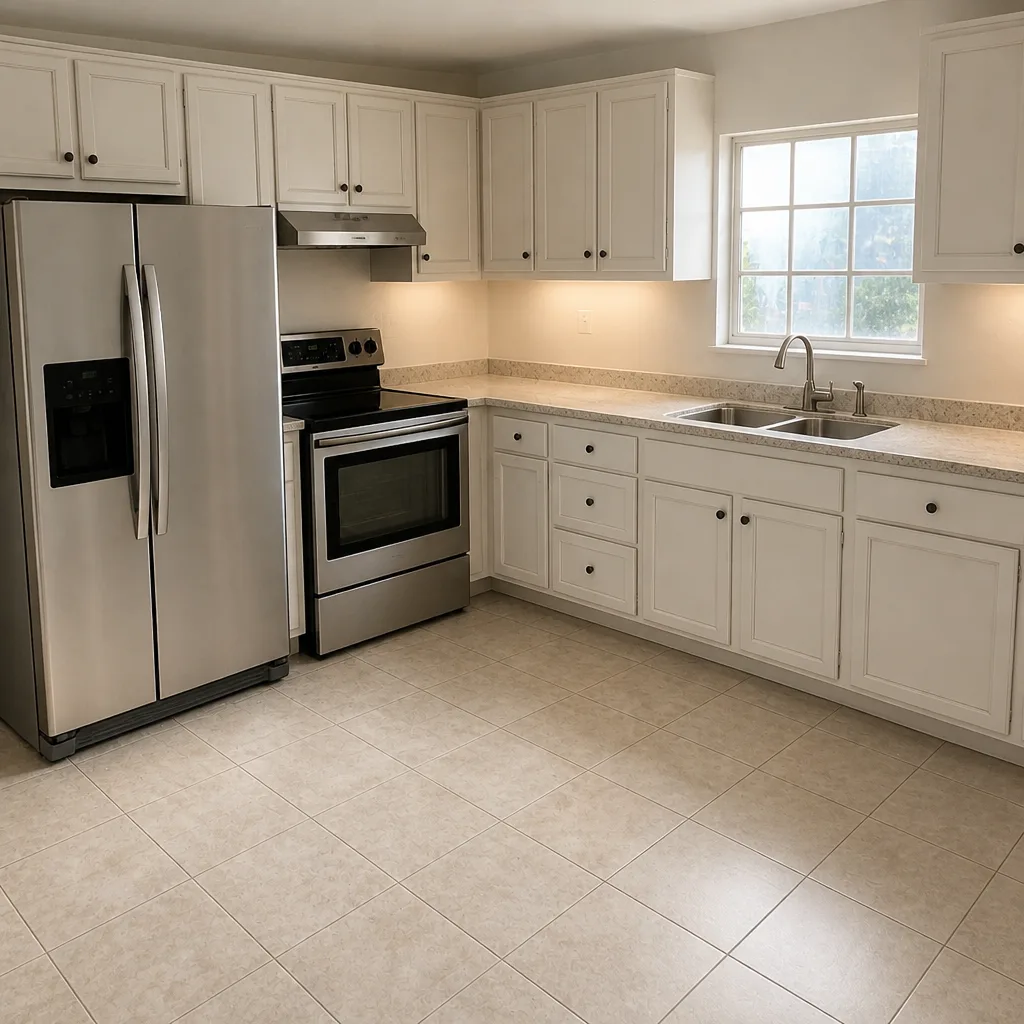
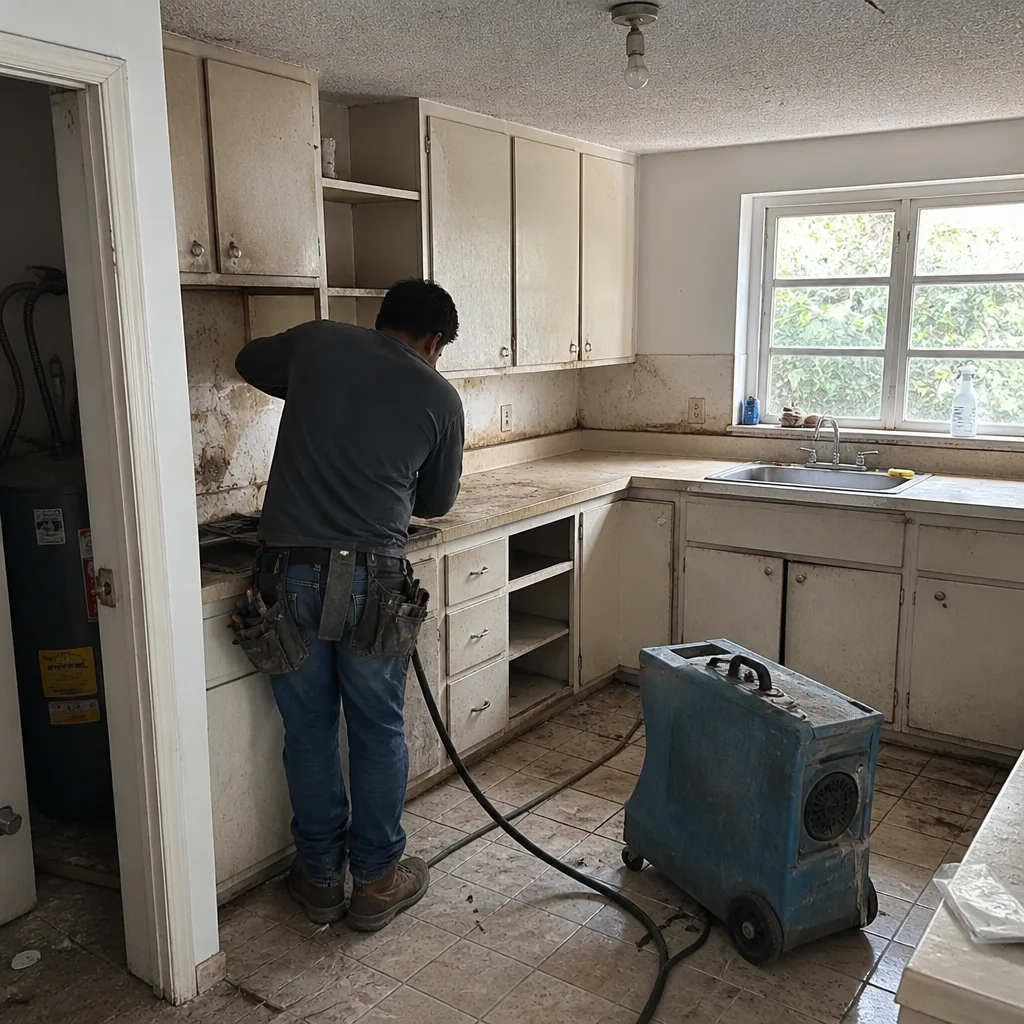
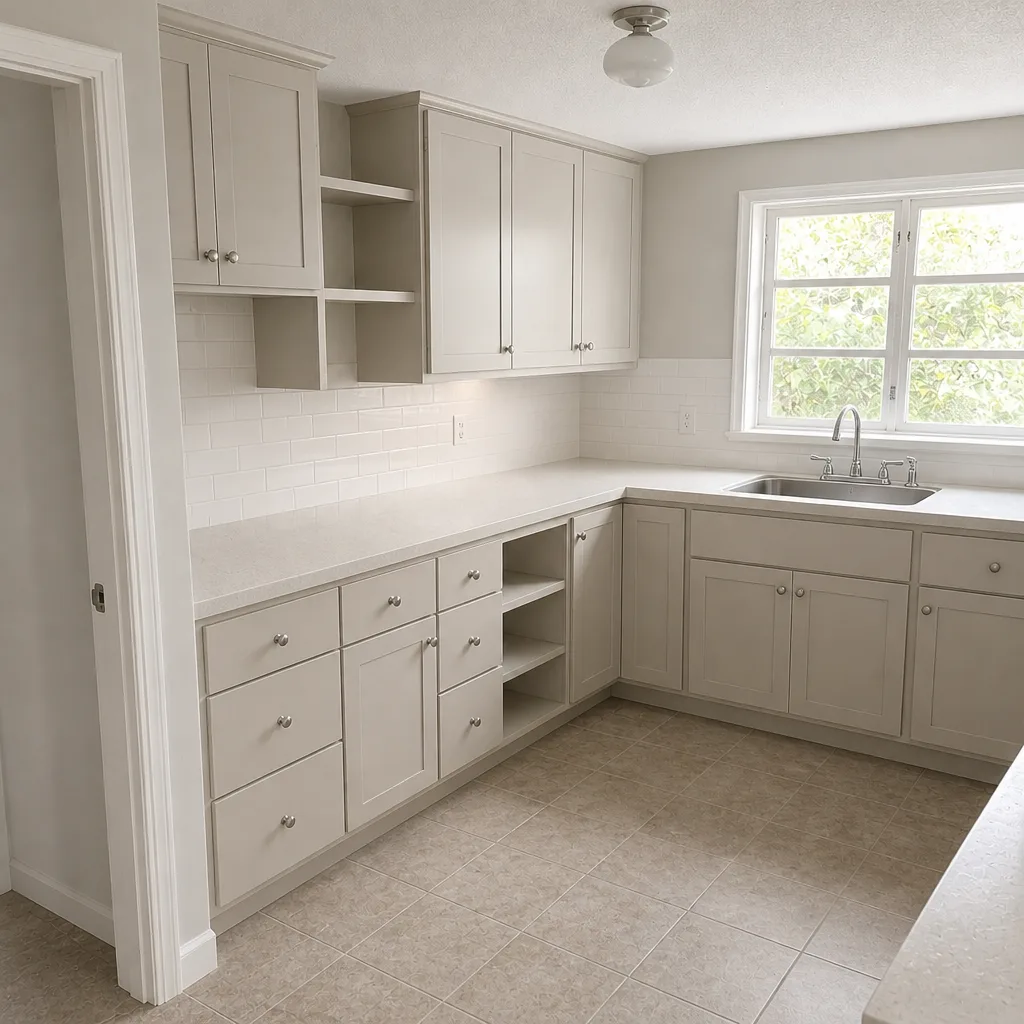
See the difference
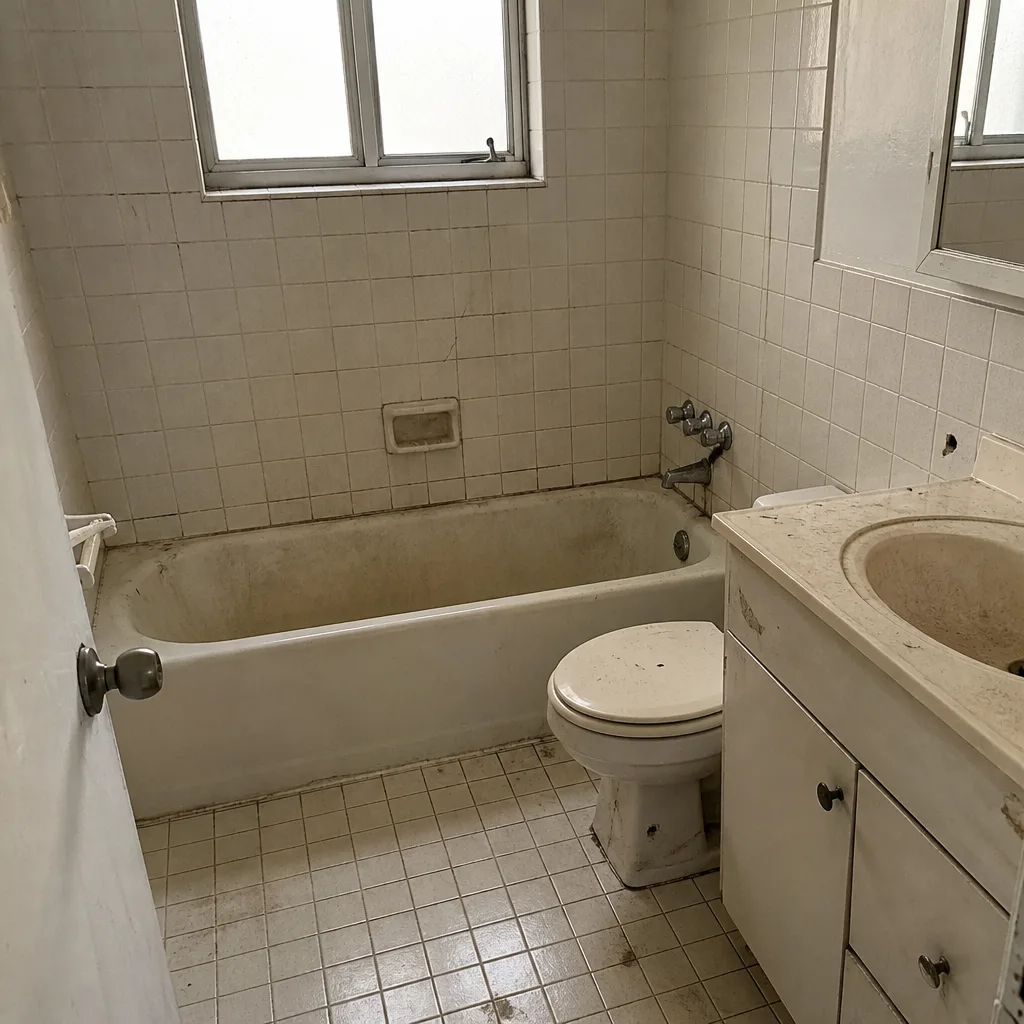 Before
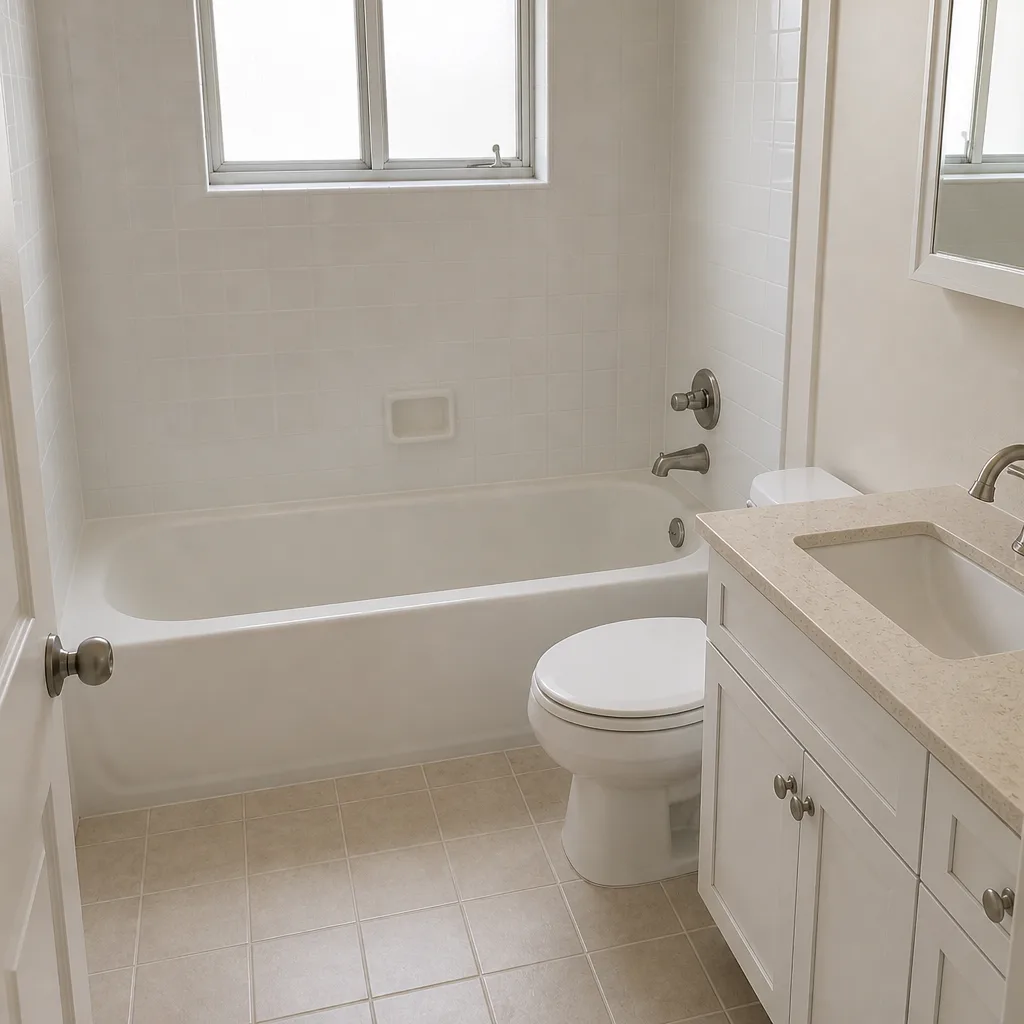 After
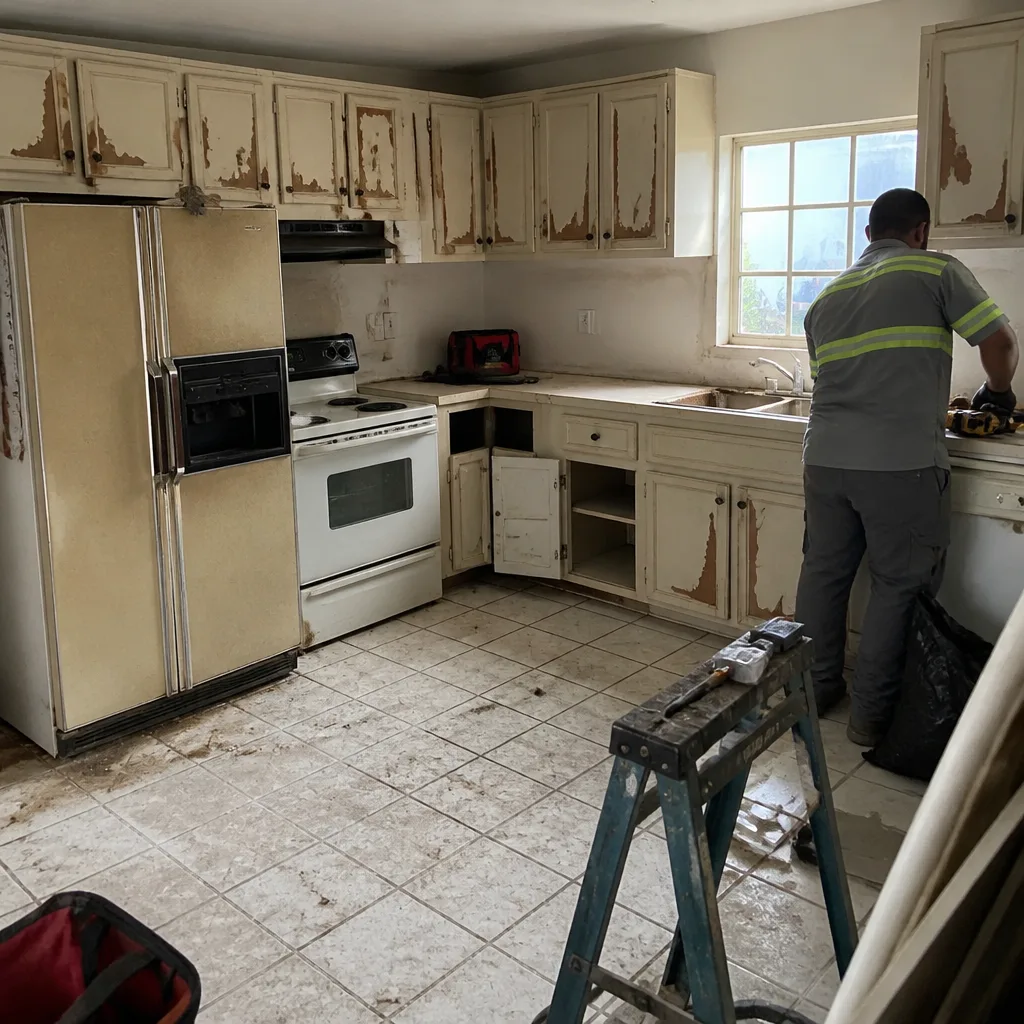 Before
 After
 Before
 After
When to Call a Professional
You need a licensed general contractor on the phone if any of the following is true: the quote you’ve received has no written waterproofing scope, the fixture allowances are blank, the exhaust ventilation spec isn’t in the contract, the guarantee has no duration or coverage listed, or you’ve had a previous bathroom fail in place and you don’t yet know why. Kendall homeowners burned by one contractor often try to self-manage the second project. That’s understandable, and it’s usually the wrong move, because the waterproofing and waterproofing-adjacent work that failed the first time is the same work that requires a trained hand and a written standard. Penhallow Remodeling Kendall offers free estimates in Kendall, written line-item pricing before work starts, and the 365-Day Done Right Promise on every project. Call (844) 560-5417 to schedule yours.
Frequently Asked Questions
The biggest warning signs are a lump-sum price with no itemized scope, no written waterproofing line, blank fixture allowances, and no written guarantee. A quote missing any one of those four is not a quote, it’s a placeholder. Call (844) 560-5417 for a written line-item quote on your Kendall bathroom.
Yes, in most cases. Any bathroom remodel that moves plumbing or electrical, or replaces a shower pan or changes wet-area layout, requires permits in Miami-Dade County. Your contract should state that permits are pulled and inspections passed, and that permit fees are included in the price. Get that in writing before signing. Call (844) 560-5417 to talk through your specific scope.
A hall bathroom in Kendall typically runs $9,000 to $18,000, a mid-range primary bath $18,000 to $35,000, and a full gut with layout changes and premium finishes $35,000 to $60,000 or more. Waterproofing method, tile selection, fixture brands, and whether plumbing relocates are the biggest price drivers. Call (844) 560-5417 for an exact figure on your bathroom; estimates are free.
It’s a written guarantee that if the work fails within 365 days of completion, the contractor comes back and fixes it at no charge, including the return visit. The key word is “written”: the terms should be in your contract with defined coverage, duration, and process. A verbal version of the same promise is not a guarantee. Call (844) 560-5417 to see the written terms we work under.
Ask for the waterproofing product name and method, ask what substrate it goes over, and ask for photographs of the waterproofed substrate taken before tile goes up. Any contractor who flinches at the photo request is a warning sign. For more scope, our Bathroom Remodeling in Kendall page covers the stage-by-stage standard.
Your exhaust fan is undersized for the room or venting into the attic instead of outside. In Kendall’s climate, undersized ventilation is the most common cause of recurring mold at grout lines and ceiling corners. Ask for the CFM rating and confirm the vent terminates at the exterior, and consider a humidistat control so the fan runs long enough after every shower. Call (844) 560-5417 if you’re planning a remodel and want the ventilation spec’d correctly.
It should not, when the scope is written and the allowances are set. The exception is discovered conditions, like rotted framing or failed plumbing inside a wall, which a professional contractor will bring to you in writing for approval before billing. Ask ahead of time what the process is for discovered conditions. Call (844) 560-5417 to talk through how we handle scope changes.
The Bottom Line
Bathroom remodeling warning signs are almost always in the paperwork, not the tile. If you catch four things before signing (itemized written scope, named waterproofing product and method, real fixture allowances, and a written guarantee with defined terms), you’ve eliminated the failure modes that produce the shower pans, ballooning budgets, and popped guarantees homeowners call us about every month in Kendall. The ventilation spec matters too, especially in Miami-Dade’s humidity. The pattern is simple: a contractor who writes it down in advance is a contractor who will show up when they said. If you’re still planning the project and want the price pinned down before a single cabinet is pulled, our Kitchen Remodeling in Kendall page is worth a look at how we approach written pricing across the whole project. If you’d rather just get a number on your bathroom, we’re ready to write it.
Ready for a written price and a written guarantee before work starts? Call (844) 560-5417 and a real person will answer, day or night. We’ll come out to your Kendall bathroom, walk the scope with you, and give you a line-item estimate you can hold us to. Free estimates, background-checked uniformed technicians, and the 365-Day Done Right Promise on every project.
Written by the team at Penhallow Remodeling Kendall.